
Search results
959 results
Search results

A male deciduous holly with an upright and dense growth habit, ideal for pollinating female fruit-bearing varieties; suckers into colonies; prefers moist to wet highly acidic soils, good for problem areas; excellent when massed
Jim Dandy Winterberry has dark green foliage throughout the season. The pointy leaves do not develop any appreciable fall color. Neither the flowers nor the fruit are ornamentally significant.
Jim Dandy Winterberry is a dense multi-stemmed deciduous shrub with a shapely oval form. Its average texture blends into the landscape, but can be balanced by one or two finer or coarser trees or shrubs for an effective composition.
This shrub will require occasional maintenance and upkeep, and is best pruned in late winter once the threat of extreme cold has passed. It has no significant negative characteristics.
Jim Dandy Winterberry is recommended for the following landscape applications;


An uplifting rose bearing unusual open cupped flowers of soft yellow, paling to cream. The scallop-shaped, incurved petals are loosely yet generously assembled around a central boss of golden stamens, creating a soft, airy appearance. There is a spectacular first flush of blooms, which are borne in well-spaced sprays and displayed proudly against the mid-green, semi-glossy foliage. Forms a healthy, medium-sized upright bush with a light myrrh fragrance, whose hips must be removed to encourage repeat flowering. Named in honour of Aneurin (Nye) Bevan, founder of Britain’s National Health Service and in recognition of the NHS, its people and associated organisations and charities.

An choice compact garden or massing shrub featuring showy spikes of flowers which fade from pure white to pink, interesting foliage with spectacular fall color and papery bark; somewhat coarse in appearance, best used in groupings

Tuxedo Weigela features showy clusters of fragrant creamy white trumpet-shaped flowers along the branches from early summer to early fall. It has dark green foliage with hints of black which emerges burgundy in spring. The serrated pointy leaves do not develop any appreciable fall color. The fruit is not ornamentally significant.

A wonderful groundcover or border, this low growing mound of stunning deep pink blossoms is a prolific bloomer throughout the season; highly disease resistant; great for small gardens and planters


Invincibelle Sublime™ Smooth Hydrangea features bold clusters of lime green flowers with chartreuse overtones at the ends of the branches from mid summer to mid fall. The flowers are excellent for cutting. It has dark green deciduous foliage. The large textured heart-shaped leaves do not develop any appreciable fall color.
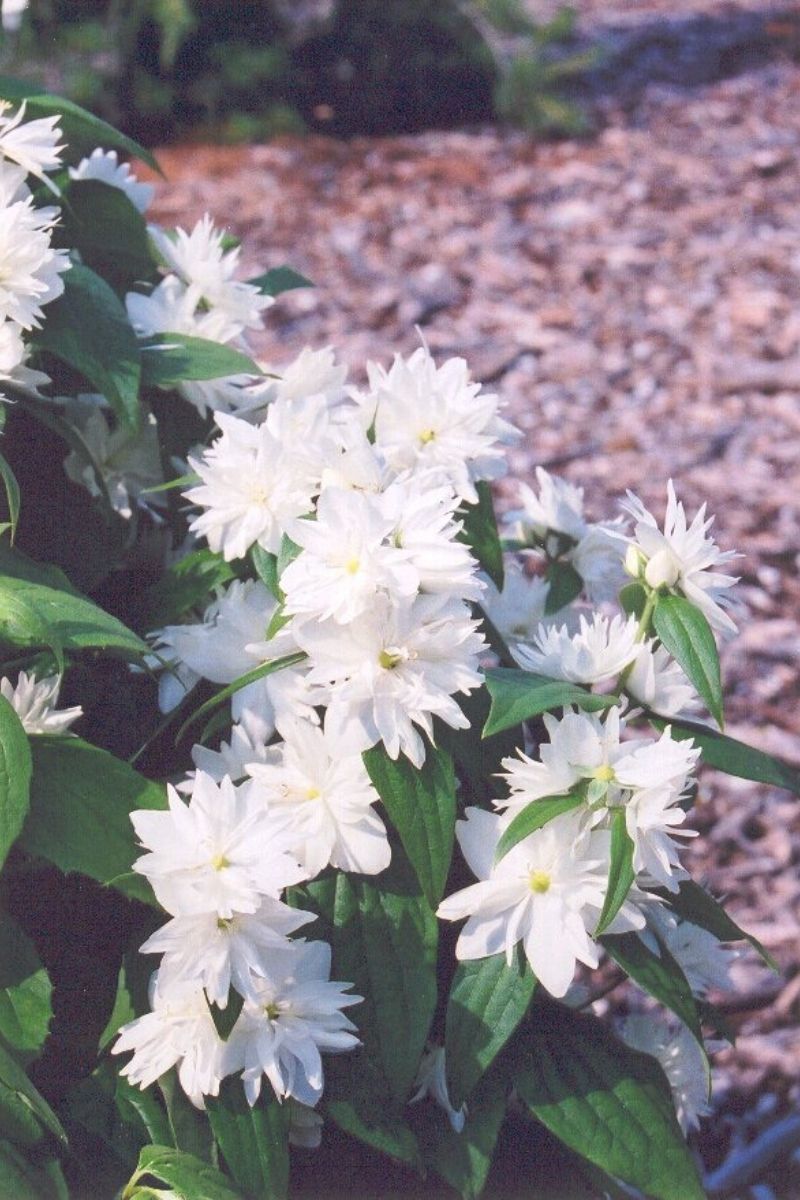
A large, spreading shrub smothered in delightfully fragrant, large double white flowers in early summer; wonderful in bloom, recedes to the background the rest of the year, best used in a composition with other plants; very adaptable and hardy

Variegated Redtwig Dogwood has attractive white-variegated green foliage on a plant with a round habit of growth. The pointy leaves are highly ornamental but do not develop any appreciable fall color. It has clusters of creamy white flowers at the ends of the branches in late spring. It produces white berries in mid summer. The red branches are extremely showy and add significant winter interest.
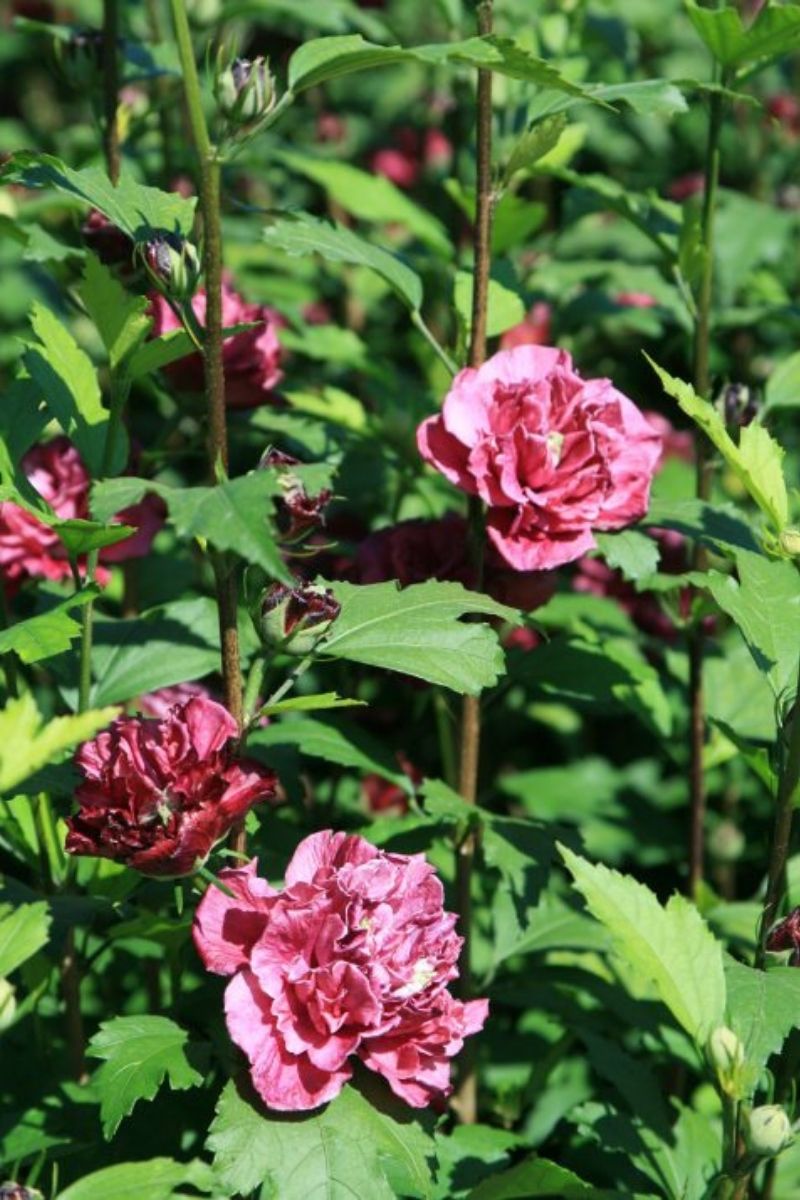
For eight weeks in summer, French Cabaret Red has clusters of three to five richly saturated red double flowers that resemble carnations. Deep red flower buds open to 2†diameter pompom flowers. Upright and vigorous growth habit.

Common Ninebark is a tough, beautiful native shrub that earns its name from the remarkable peeling, multi-layered bark that adds year-round texture and winter interest to the landscape. In late spring and early summer, it’s smothered in clusters of delicate white flowers that attract butterflies in abundance, followed by reddish ornamental capsules through summer and fall. Growing 5–9 feet tall with a mounding habit, it’s well-suited for hedges, borders, mass plantings, and naturalized areas in sun to partial shade. Rich green foliage turns warm red-burgundy and copper-bronze in autumn. Fully resistant to deer, rabbits, insects, and disease, native to the Great Lakes region, and tolerant of Black Walnut, erosion, and cold — it is genuinely one of the most adaptable and hardworking native shrubs available. A cornerstone planting for any sustainable, wildlife-friendly garden.

Weston's Innocence Rhododendron is clothed in stunning clusters of fragrant white trumpet-shaped flowers at the ends of the branches in mid spring. It has green evergreen foliage. The narrow leaves turn an outstanding purple in the fall, which persists throughout the winter.


Marmalade® Potentilla features showy orange flowers at the ends of the branches from early summer to mid fall. It has dark green deciduous foliage. The small ferny compound leaves do not develop any appreciable fall color.


American Hazelnut is a native multi-stemmed shrub that earns its place in the landscape many times over — with fuzzy yellow catkins in early spring, lush summer foliage, excellent golden fall color, and a nutritious crop of hazelnuts in autumn that birds and wildlife prize as much as we do. Growing 9–15 feet tall and spreading generously, it naturally forms a dense, mounding thicket that makes an outstanding hedge, screening border, or naturalized planting in sun to partial shade. Fully resistant to deer, rabbits, insects, and disease, it’s one of the most carefree native shrubs available. It tolerates Black Walnut and handles erosion-prone sites with ease. A genuinely rewarding plant that gives back to the garden and to local wildlife every single season.


Honeycomb® Ninebark makes a statement with large, vibrant, chartreuse leaves that hold their color all season long, even in full sun. In the spring, white flowers provide lovely contrast to the leaves, and in the fall, gold leaves provide stunning fall interest. Maturing at 4-6 feet tall and 5-7 feet wide, Honeycomb® makes for a beautiful hedge or color block along a fence line.
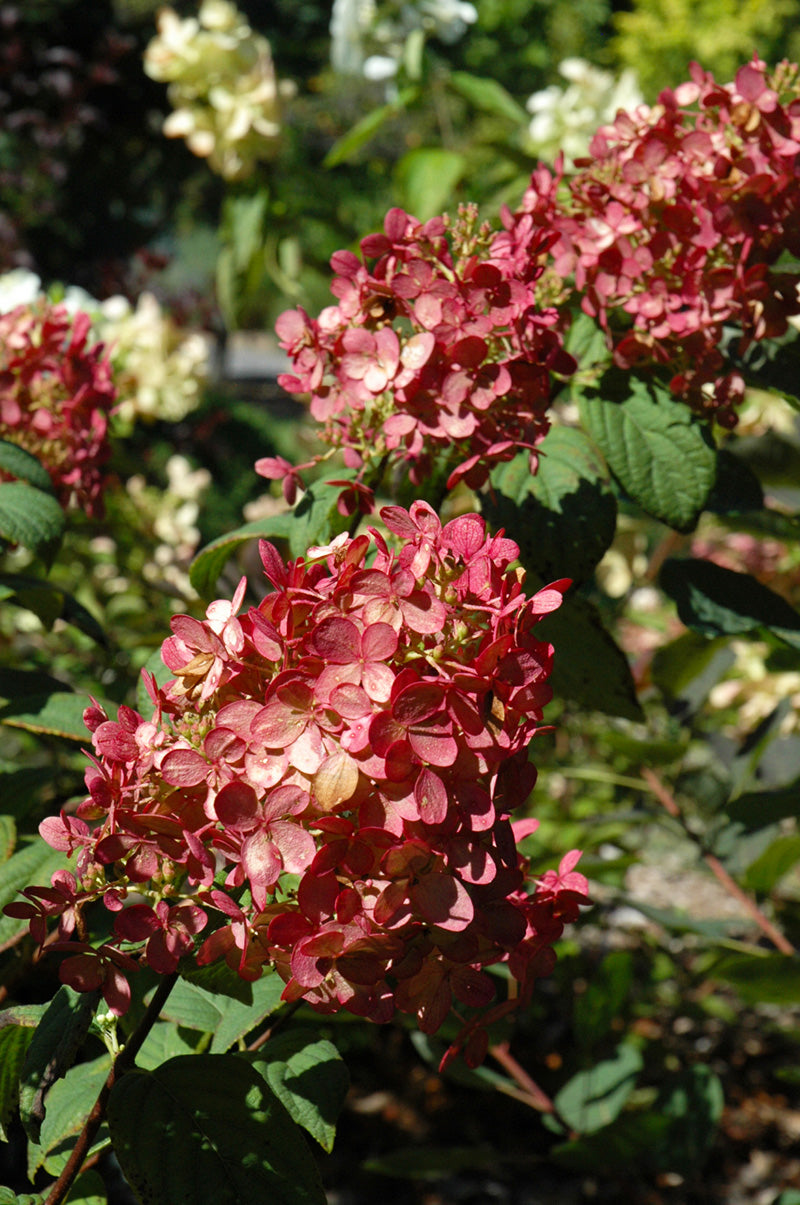
Fire Light's vividly colored flowers absolutely sizzle in the summer garden. This large, hardy Panicle Hydrangea (cone-shaped flowers) has dense flowers that emerge creamy white, gradually changing to pomegranate pink, then finally tan over the winter. Blooming August through September, the multi-hued, long-lasting flowers are great for cutting and drying. Excellent for late season color in foundation plantings and shrub borders, either as an accent or in groups. Panicle Hydrangea don't appreciate shade as much as other Hydrangea, and are best planted in full to partial sun and kept evenly moist. Prune lightly in late fall or early spring, removing no more than 1/3 of the stem length.

Illuminati Tower® Mockorange is clothed in stunning clusters of fragrant white flowers with buttery yellow anthers at the ends of the branches from late spring to early summer. The flowers are excellent for cutting. It has dark green deciduous foliage. The serrated pointy leaves do not develop any appreciable fall color.
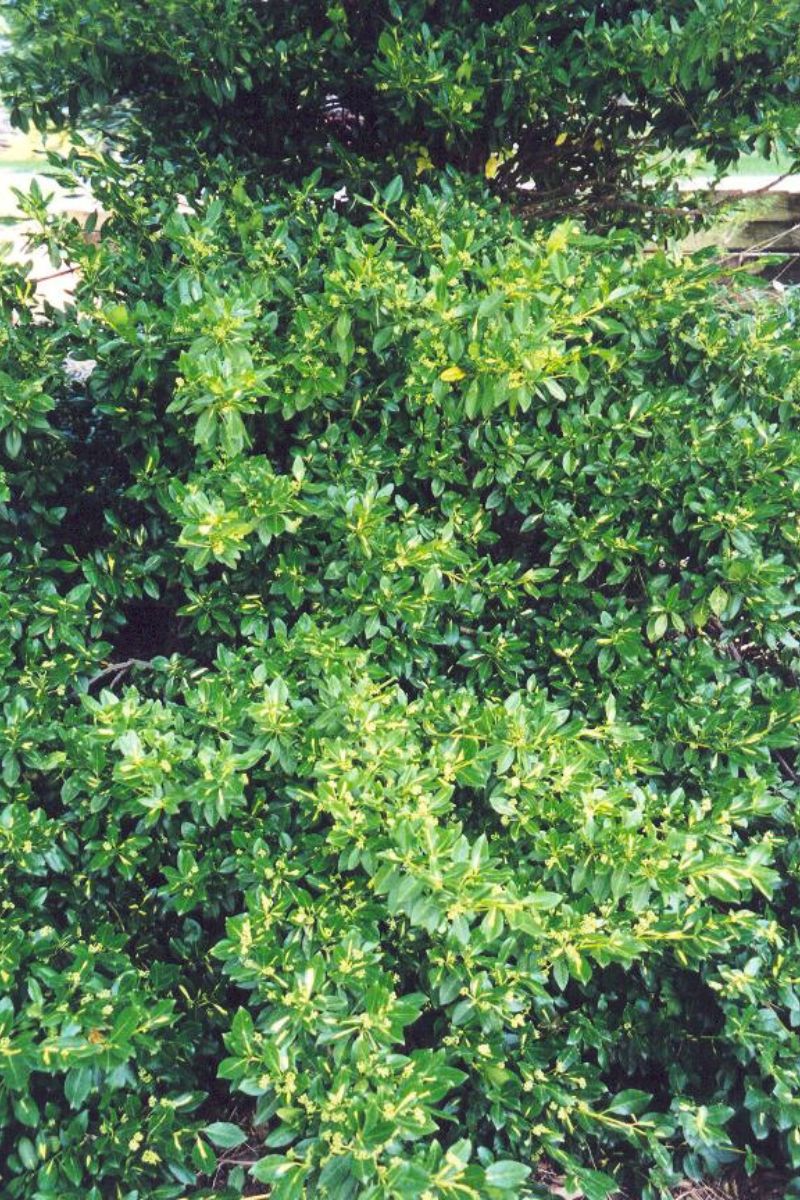
Green Lane has rich green evergreen foliage on a plant with a spreading habit of growth. The glossy oval leaves remain green throughout the winter. It produces pink capsules from mid to late fall.
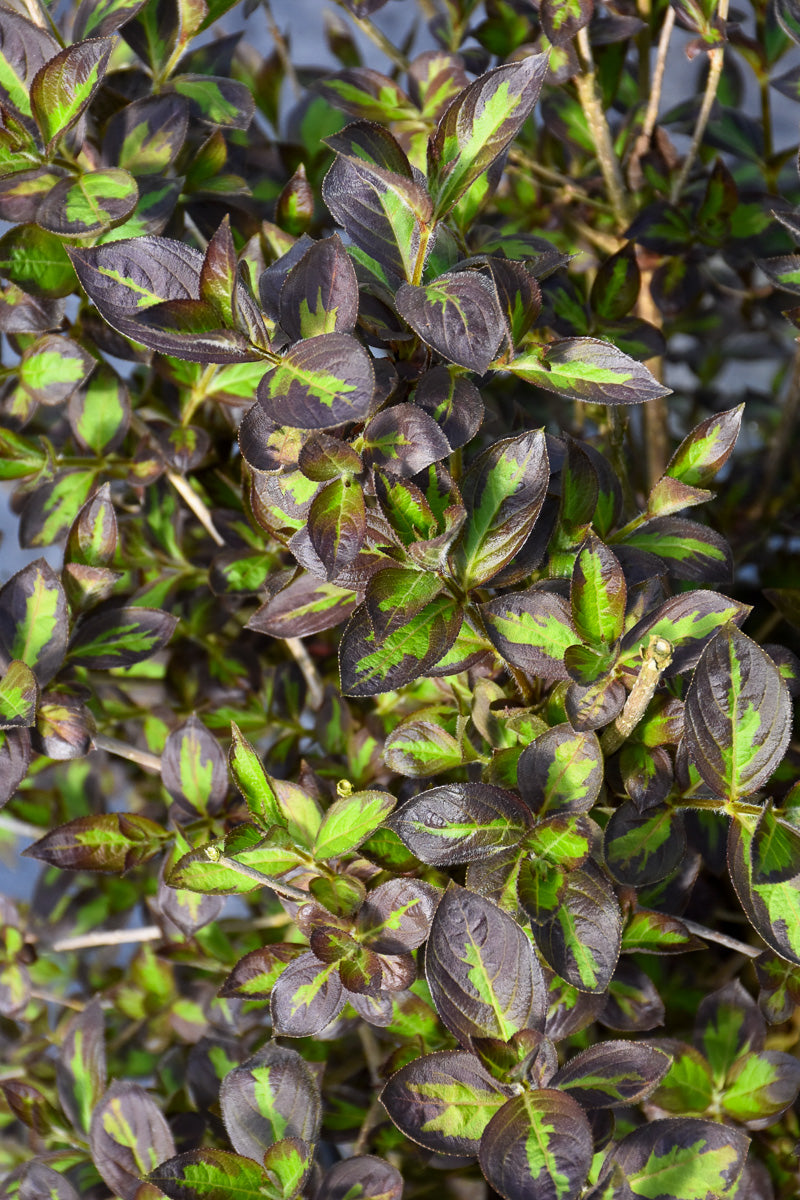
Vinho Verde® Weigela features showy clusters of pink trumpet-shaped flowers along the branches from late spring to early summer, which emerge from distinctive red flower buds. It has attractive lime green foliage edged in black with hints of burgundy. The pointy leaves are highly ornamental but do not develop any appreciable fall color.

Cecile Brunner Rose features showy clusters of lightly-scented pink flowers along the branches from mid spring to early fall. The flowers are excellent for cutting. It has dark green deciduous foliage which emerges red in spring. The glossy oval compound leaves do not develop any appreciable fall color.