
Search results
40 results
Search results

A very popular shade tree, valued for its delicate, ferny appearance which casts a dappled shade below; foliage emerges a brilliant yellow, fading to light green; broad spreading habit of growth, seedless, very tolerant of adverse growing conditions

Skyline Honeylocust has dark green deciduous foliage on a tree with a pyramidal habit of growth. The pinnately compound leaves turn an outstanding gold in the fall.


With vanilla notes and a luminous pale hue, our premium Raw Acacia Honey touches the palate with delicate perfection. Known for its distinct clarity and resistance to crystallization, this single-varietal gem comes from honey harvested from the forests of black locust trees that grow from Northern Italy to Ukraine.
Acacia honey’s high fructose content helps it remain in a liquid state—some call it “white water.”


Honeycomb® Ninebark makes a statement with large, vibrant, chartreuse leaves that hold their color all season long, even in full sun. In the spring, white flowers provide lovely contrast to the leaves, and in the fall, gold leaves provide stunning fall interest. Maturing at 4-6 feet tall and 5-7 feet wide, Honeycomb® makes for a beautiful hedge or color block along a fence line.

Few plants are as endlessly charming—or as forgiving—as Hen & Chicks, and the Trio Honeycrisp collection brings three coordinating selections together for instant character. Tight evergreen rosettes multiply freely, sending out little ‘chicks’ that cluster around the parent in living, sculptural mosaics. Thriving in full sun with very little water, these tough succulents are perfect for containers, rock gardens, trough plantings, or tucked between stepping stones. Their fleshy leaves are reliably deer-resistant and shrug off heat, drought, and poor soil with ease. Watch in summer for curious red blooms that rise on stems above the rosettes before the plant resets and carries on. It’s a low, ground-hugging accent that rewards almost no effort with year-round structure and texture.


Imperial Honeylocust has rich green deciduous foliage on a tree with a round habit of growth. The pinnately compound leaves turn an outstanding yellow in the fall.

A neat, ball-shaped and mounded shrub which features blue-green foliage, small yellow flowers in spring and red berries in fall; excellent choice for use in groups or as a natural hedge because of its consistent shape; easy to grow and very adaptable

A very popular vine valued for its exceptionally colorful pinkish-red tubular flowers which are produced over a very long period; very easy to grow and not excessively aggressive, a great choice for arbors and trellises


Hall's Japanese Honeysuckle is covered in stunning clusters of fragrant white trumpet-shaped flowers with yellow overtones at the ends of the branches from late spring to late summer. It has dark green evergreen foliage. The pointy leaves remain dark green throughout the winter. It produces black berries from late summer to late fall.
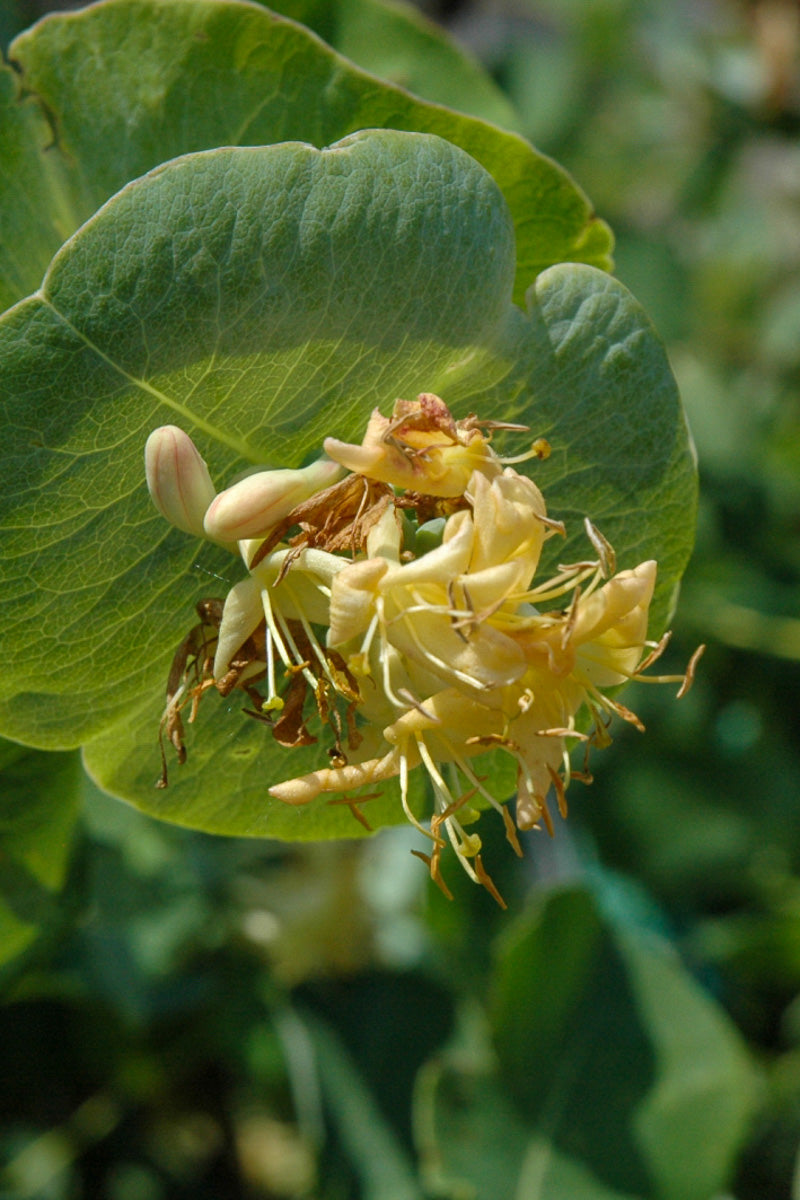
Kintzley's Ghost Honeysuckle features showy clusters of yellow trumpet-shaped flowers with silver bracts at the ends of the branches from late spring to mid summer. It has bluish-green deciduous foliage. The oval leaves do not develop any appreciable fall color.
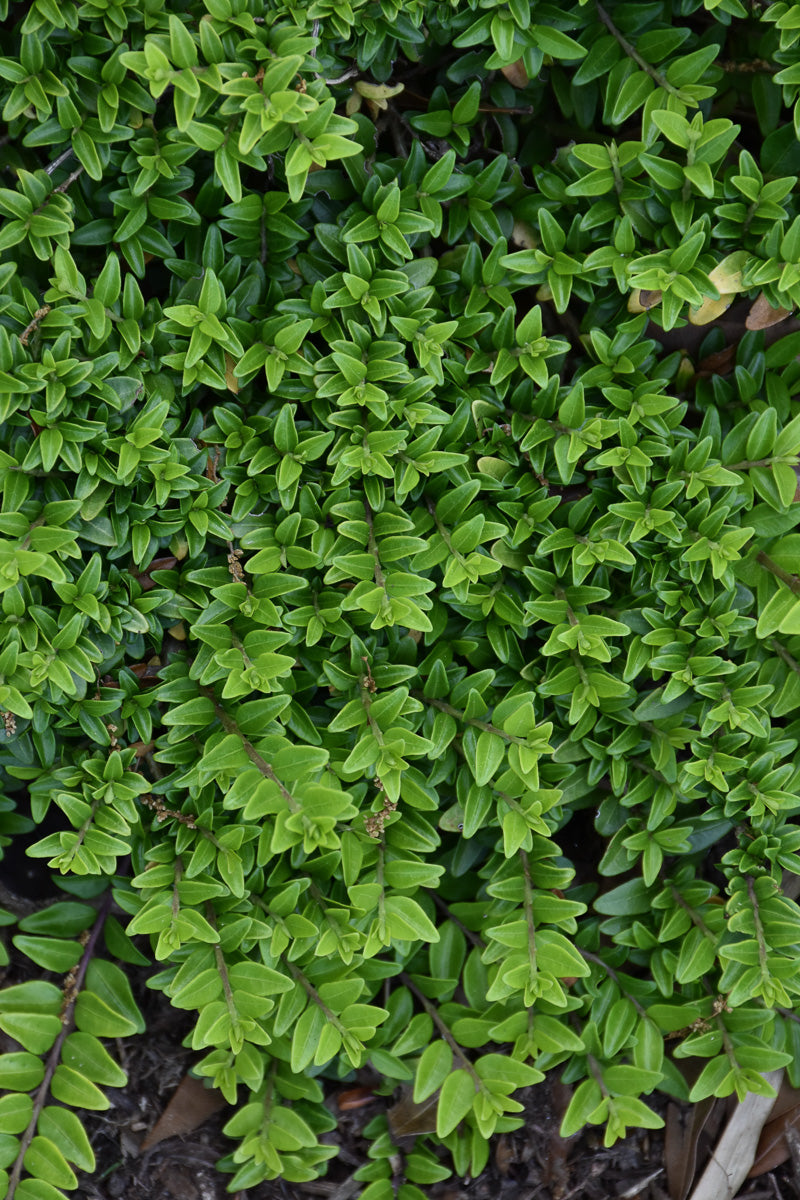
Thunderbolt™ Box Honeysuckle has attractive gold-variegated green foliage with hints of chartreuse which emerges yellow in spring on a plant with an arching habit of growth. The tiny glossy oval pinnately compound leaves are highly ornamental and remain green throughout the winter. It is clothed in stunning lightly-scented creamy white tubular flowers at the ends of the branches in late spring. It produces deep purple berries in late summer.


A round-headed shade tree with highly fragrant and very attractive chains of deep pink flowers in late spring. Very tolerant of rough conditions and can even survive sandy soil. A relatively fast-grower, but can be pruned to remain small. New foliage growth is slightly reddish-bronze. Native of North America.
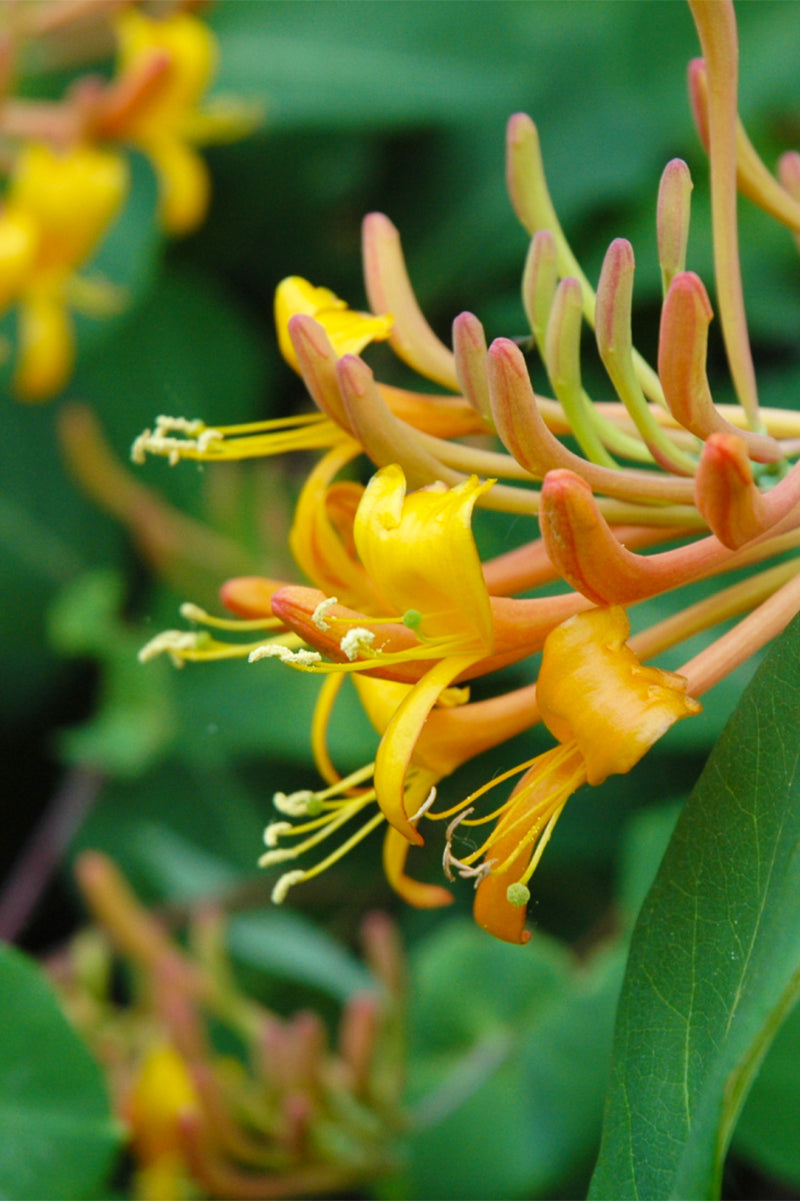
Mandarin Trumpet Honeysuckle features showy clusters of orange trumpet-shaped flowers with tomato-orange overtones and gold throats at the ends of the branches from mid spring to early summer. It has forest green deciduous foliage which emerges coppery-bronze in spring. The oval leaves do not develop any appreciable fall color.
