
Drought Resistant Plants
Keep your garden thriving with drought-resistant plants that offer beauty with less water. Ideal for low-maintenance landscapes and eco-friendly gardening.
Schedule a 15-min appointment with a product specialist before your visit to Chalet. Ask about our plant warranty policy. We also offer local delivery.
77 products
Sort by:
77 products
77 products

Eveline Sage has masses of beautiful spikes of shell pink flowers with lavender overtones rising above the foliage from late spring to early summer, which are most effective when planted in groupings. The flowers are excellent for cutting. Its attractive fragrant narrow leaves remain grayish green in color throughout the season.

Marcus Sage has masses of beautiful spikes of royal blue flowers rising above the foliage from late spring to early summer, which are most effective when planted in groupings. The flowers are excellent for cutting. Its fragrant narrow leaves remain grayish green in color throughout the season.

Chick Charms® Giant Pink Sapphire Hens And Chicks features unusual clusters of rose star-shaped flowers with light green edges rising above the foliage in mid summer. Its attractive succulent pointy leaves remain burgundy in color with prominent rose tips throughout the season.


This non-invasive variety of a native honeysuckle is a durable shrub with striking foliage and long-lasting yellow flower clusters. Grows in a dense, spreading mound. New leaves emerge burgundy black, maturing to purplish green in summer, then back to rich purple in fall. Starting in May, clusters of yellow flowers at the branch tips bloom for many weeks and attract scores of butterflies, hummingbirds and pollinators. Adaptable to different conditions, including dry shade, although flowering will be diminished. Stunning planted in groups in foundations, shrub borders and natural settings.
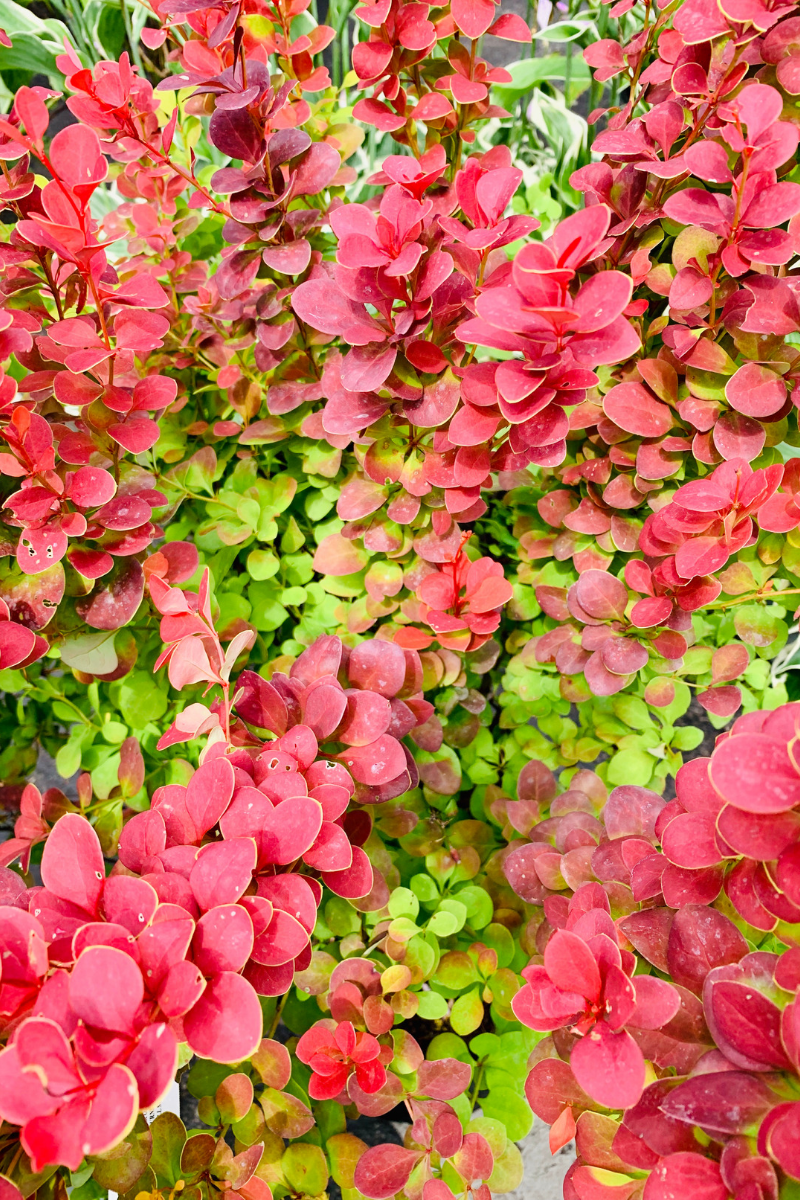
Ever-changing, multi-hued foliage lends a fiery burst of color to your landscape! Dense, thorny plant features small oval leaves that emerge vibrant coral-orange in spring, gradually turning bright green in summer, then back to intense oranges and reds in fall. Subtle yellow spring flowers. The compact plant grows quickly into a narrow columnar shape without pruning, fitting perfectly into today's smaller gardens. Makes a great specimen, barrier or hedge plant and "thriller" element in sunny containers.

Autumn Fire Stonecrop has masses of beautiful clusters of rose flowers at the ends of the stems from late summer to late fall, which emerge from distinctive coral-pink flower buds, and which are most effective when planted in groupings. The flowers are excellent for cutting. Its large succulent round leaves remain grayish green in color throughout the season.

Giant Lamb's Ears's attractive large tomentose oval leaves emerge silver in spring, turning grayish green in color throughout the season on a plant with a mounded habit of growth. It has masses of beautiful spikes of pink flowers rising above the foliage in early summer, which are most effective when planted in groupings.


Tough and hardy evergreen is best in large areas. Mugo Pine has stiff dark green needles and a highly variable habit of growth—it generally grows wider than tall in a broad, rounded and bushy form, but can also be trained into a multi-trunked tree if lower branches are removed. Adaptable to most soil types, except wet ones. Give this plant plenty of room to spread!

Kodiak ® Red diervilla is a native flowering shrub that looks great while shrugging off shade and problem soils. New growth emerges in spring with a deep burgundy tone, and turns vivid red in fall. During summer, leaves have a red edge and clusters of small yellow flowers appear all season. It's a simple but beautiful way to add low-maintenance color to parts of your yard that have been difficult to landscape.
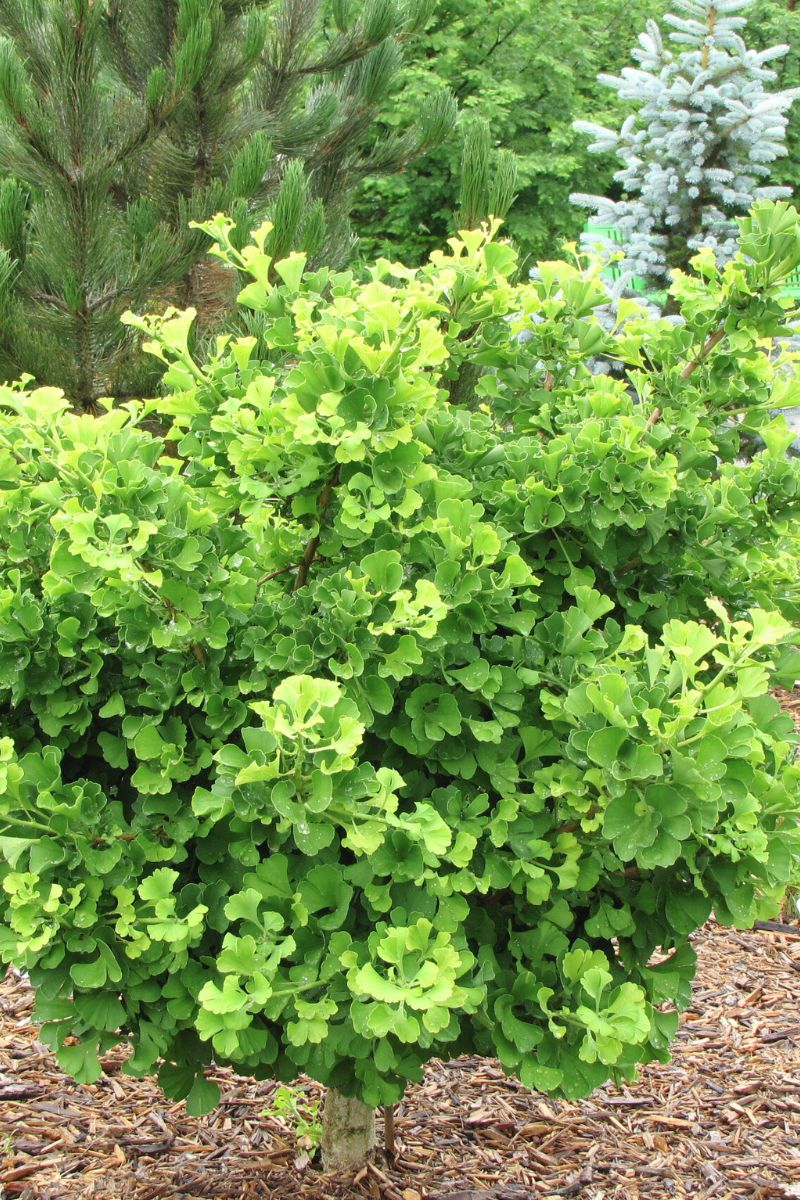

Mariken Dwarf Ginkgo is primarily valued in the garden for its ornamental globe-shaped form. It has bluish-green deciduous foliage which emerges chartreuse in spring. The fan-shaped leaves turn an outstanding buttery yellow in the fall.


Standing Ovation Bluestem's attractive grassy leaves are dark green in color with showy silvery blue variegation and tinges of purple on a plant with an upright spreading habit of growth. As an added bonus, the foliage turns a gorgeous violet in the fall. It has masses of beautiful spikes of purple flowers rising above the foliage in late summer, which are most effective when planted in groupings.

Shortbeak Sedge is primarily valued in the garden for its interestingly mounded form. It features airy spikes of chartreuse flowers rising above the foliage in mid spring. Its attractive grassy leaves remain forest green in color throughout the season.

Blue By You Meadow Sage has masses of beautiful spikes of blue flowers with violet overtones and burgundy calyces rising above the foliage from mid spring to early fall, which are most effective when planted in groupings. The flowers are excellent for cutting. Its fragrant narrow leaves remain green in color throughout the season.

Big Blackhawk Bluestem brings the bold, sweeping drama of the prairie into the home garden. This stately native grass forms tall, upright clumps that climb to three to five feet, adding vertical structure and graceful movement wherever it’s planted. Native to the central and eastern United States, it thrives in full sun and lean, dry soil, growing tougher and more drought-tolerant with each passing season. As autumn arrives, its green blades take on warm coppery-bronze tones that catch the late-season light and persist into winter. Songbirds feed on its seed heads through the cold months, and it’s seldom browsed by deer. Plant it in sweeping masses on a sunny slope or as a living screen—it’s prairie grandeur at its finest.

Thundercloud Stonecrop has masses of beautiful clusters of white star-shaped flowers at the ends of the stems from late summer to early fall, which emerge from distinctive creamy white flower buds, and which are most effective when planted in groupings. The flowers are excellent for cutting. Its attractive succulent pointy leaves remain grayish green in color throughout the season.

A low, spreading cactus that creates stunning visual impact with papery bright yellow or fuchsia flowers. This hardy groundcover naturally forms colonies several feet across, making it ideal for xeriscaping and large-scale plantings. The distinctive reddish-purple fruit is covered with protective spines, adding year-round interest. Perfect for containers or as a dramatic landscape accent, this prickly pear thrives in full sun and well-draining soil with minimal water requirements once established.

Kodiak Fresh® Diervilla features showy panicles of yellow trumpet-shaped flowers at the ends of the branches from early to mid summer. It has lime green-variegated yellow foliage with hints of chartreuse which emerges red in spring. The pointy leaves turn outstanding shades of orange and in the fall. The brick red stems can be quite attractive.

Feathers Peacock Salvia has masses of beautiful spikes of purple flowers with blue overtones and burgundy calyces rising above the foliage from late spring to mid fall, which are most effective when planted in groupings. The flowers are excellent for cutting. Its fragrant lobed leaves remain dark green in color throughout the season.

Early Birdâ„¢ Frosty Pinks is draped in stunning fragrant white frilly flowers at the ends of the stems from early spring to late summer. The flowers are excellent for cutting. Its attractive grassy leaves remain grayish green in color with hints of silvery blue throughout the year.

Flowers are lovely, but its foliage that anchors most plants through the season, and its foliage that makes Sunjoy Sequins barberry so unique. New growth emerges in a shimmering palette of white, pink, and mint green before maturing to emerald. This large shrub is a nice choice for a colorful hedge or eye-catching specimen, and its variegation makes it more shade tolerant than other barberries.

An arching, sprawling evergreen shrub with very pointy needles streaked with interesting silvery blue lines and abundant showy powdery blue berries; extremely adaptable to poor soils and dry locations, very hardy Blueberry Delight Juniper is primarily grown for its highly ornamental fruit. It features an abundance of magnificent blue berries from late spring to late winter. It has attractive powder blue foliage with silver stripes. The needles are highly ornamental and turn coppery-bronze in fall. The flowers are not ornamentally significant. Blueberry Delight Juniper is a multi-stemmed evergreen shrub with a ground-hugging habit of growth. It lends an extremely fine and delicate texture to the landscape composition which can make it a great accent feature on this basis alone. This is a relatively low maintenance shrub, and is best pruned in late winter once the threat of extreme cold has passed. It has no significant negative characteristics. Blueberry Delight Juniper is recommended for the following landscape applications; Mass Planting General Garden Use Groundcover This shrub should only be grown in full sunlight. It is very adaptable to both dry and moist growing conditions, but will not tolerate any standing water. It is considered to be drought-tolerant, and thus makes an ideal choice for xeriscaping or the moisture-conserving landscape. It is not particular as to soil type or pH. It is highly tolerant of urban pollution and will even thrive in inner city environments. This is a selection of a native North American species.

Hillside Creeper Scotch Pine is a dwarf conifer which is primarily valued in the garden for its broadly spreading habit of growth. It has rich green evergreen foliage. The needles remain green throughout the winter.

This compact, long blooming perennial makes a colorful specimen in pots and really makes a splash when planted en masse near the front of flower borders. Dark burgundy-red petals are rimmed in gold and accented by yellow centers. A hardy selection with great disease resistance.


Autumn Inferno® Cotoneaster is primarily grown for its highly ornamental fruit. It features an abundance of magnificent scarlet berries from late summer to late fall. It has attractive dark green evergreen foliage. The small glossy oval leaves are highly ornamental and turn outstanding shades of scarlet, yellow and orange in the fall, which persists throughout the winter. It features tiny clusters of shell pink flowers along the branches in late spring.
Showing 54/77
Next
Have questions?
Shopping Consultation
Now you can book an in-person appointment with one of our product experts who'll help you find everything you need prefect for your home and garden, including outdoor and indoor plants, garden essentials, furniture, home décor, pet food and accessories, apparel, bath + body, and much more.


