
Search results
649 results
Search results

Pugster® Pinker Butterfly Bush features showy panicles of fragrant pink flowers with orange eyes at the ends of the branches from mid summer to mid fall, which emerge from distinctive rose flower buds. The flowers are excellent for cutting. It has dark green deciduous foliage. The narrow leaves do not develop any appreciable fall color.
- Mature Height: 24 inches
- Mature Width: 3 feet
- Sunlight: Full Sun
- Soil Conditions: Dry to Moist
Plants are constantly growing, ever-changing, and therefore unique. The plant you receive may vary from the photo, but rest assured, it holds the same glorious potential!

Pugster Sorbet butterfly bush delivers irresistible color in a compact package. Each flower spike stacks soft shades of purple and white, creating a standout display. Its tidy, rounded habit fits perfectly at the front of the border, in groups, or as a low hedge. It attracts pollinators and stays seedless as part of the In-Check program, giving you classic butterfly-bush charm with modern performance.
Top reasons to grow Pugster Sorbet buddleia:
- Soft, multi-toned blooms
- Strong landscape performance
- Excellent butterfly appeal

Birthday Cake™ Butterfly Bush features showy panicles of fragrant purple flowers with hot pink overtones at the ends of the branches from early summer to mid fall, which emerge from distinctive deep purple flower buds. The flowers are excellent for cutting. It has green deciduous foliage. The serrated narrow leaves do not develop any appreciable fall color.

A compact garden plant with large, full size violet-blue flowers with yellow-orange eyes on sturdy stems; attracts butterflies; may treat as a perennial and cut it back to the ground each spring as it regrows vigorously and blooms on new wood

Grand Cascade Butterfly Bush features showy panicles of fragrant lavender flowers with purple overtones at the ends of the branches from mid summer to early fall. The flowers are excellent for cutting. It has grayish green deciduous foliage. The narrow leaves do not develop any appreciable fall color. Light lavender purple flower panicles are enormous at 12-14" long and 4" thick. Their passive coloring and texture makes a wonderful backdrop for perennials, and you'll love the butterflies, bees, and hummingbirds that flock to their honey-scented blossoms.

Pink Cascade Butterfly Bush features showy panicles of fragrant pink flowers with orange eyes at the ends of the branches from mid summer to early fall. The flowers are excellent for cutting. It has light green deciduous foliage. The narrow leaves do not develop any appreciable fall color.

Asian Moon Butterfly Bush features showy panicles of fragrant purple flowers with orange eyes at the ends of the branches from early summer to mid fall. The flowers are excellent for cutting. It has green deciduous foliage. The narrow leaves do not develop any appreciable fall color. This is a relatively low maintenance shrub, and is best pruned in late winter once the threat of extreme cold has passed. It is a good choice for attracting bees, butterflies and hummingbirds to your yard, but is not particularly attractive to deer who tend to leave it alone in favor of tastier treats. It has no significant negative characteristics.

An easy-to-grow white version of the Native Coneflower (Nativar) with less droopy flower petals and a more richly colored central cone. Daisy-like creamy white flowers with a coppery red cone bloom from June to September, attracting butterflies and birds. Great with sun-lovers Butterfly Bush (Buddleaia), Daylily (Hemerocallis), Goldenrod (Solidago), Phlox and ornamental grasses. Leave plants standing over the winter so birds can enjoy the seeds!

Jolene Jolene Beauty Bush is a charming and compact selection that is simply irresistible in bloom. In spring, the rounded mounding form disappears beneath a cloud of delicate pink tubular flowers that butterflies adore. Growing just 3–5 feet tall and wide, it’s a wonderful choice for smaller borders and mixed shrub plantings in full sun. Lush green foliage carries through the season, wrapping up with warm yellow-gold tones in fall. Fully resistant to deer, rabbits, insects, and disease, it’s a carefree, reliable performer that asks very little. A sweet, cottage-garden-worthy shrub that delivers enormous spring charm in a tidy, manageable package.

An easy to grow improvement on the Native Coneflower (Nativar) Magnus' flower has less droopy petals and a more richly colored central cone. Daisy-like rosy lavender flowers with a coppery red cone bloom from June to September, the flowers attracting butterflies and birds. Great with sun-lovers Butterfly Bush (Buddleaia), Daylily (Hemerocallis), Goldenrod (Solidago), Phlox and ornamental grasses. Leave plants standing over the winter so birds can enjoy the seeds!

Native Butterfly Weed attracts flocks of Monarchs and other beneficial pollinators like a magnet. It's very dark green, linear leaves and a low, mounded form make this plant ideal in front of taller plants. July brings masses of fragrant, bright orange bloom clusters that last for weeks. Not fussy as long you give it plenty of sun and soil that doesn't stay wet after a soaking rain. Deer resistant, and drought tolerant once established.

Beauty Bush is a graceful old-fashioned shrub that justifies its name with a spectacular spring and early summer show of masses of soft pink tubular flowers with yellow throats, completely covering the arching branches in a cloud of bloom. Growing 5–9 feet tall with a graceful mounding habit, it makes a beautiful informal specimen or back-of-border anchor in full sun. Butterflies flock to the flowers, and birds appreciate both the shelter and the bristly seed clusters that follow. A spectacular show of orange, red, gold, and copper-bronze fall color adds ornamental bonus well beyond the bloom period. Fully resistant to deer, rabbits, insects, and disease, it’s a carefree, long-lived shrub that improves with age. An heirloom beauty that rewards generously with very little care.

Beauty, functionality and ease of growth combine to make this ornamental grass a best-seller! Tall stems of wheat-like flowers rise in June above the clump of leaves and remain attractive well into the winter. Upright form makes it ideal for narrow spaces, but it also looks terrific when planted in mass. Mingles well with just about anything including Butterfly Bush (Buddleia), Blue Mist Spirea (Caryopteris), Coneflower (Echinacea), Cranesbill (Geranium), Daylily (Hemerocallis), and Shasta Daisy (Leucanthemum). Cut back old foliage to a few inches in early spring.

Buttonbush is covered in stunning clusters of creamy white button flowers with buttery yellow overtones at the ends of the branches from late winter to early summer. The flowers are excellent for cutting. The white fruits are held in abundance in spectacular clusters from late summer to late winter. It has light green evergreen foliage. The tiny narrow leaves remain light green throughout the winter.

Whorled Milkweed is a delicate, fine-textured native that’s a quiet powerhouse for the pollinator garden. Its slender stems are dressed in airy whorls of needle-thin leaves, giving it a soft, almost feathery presence among bolder companions. Native across much of the eastern U.S., it serves as an essential host plant for Monarch caterpillars while its summer flower clusters draw butterflies and other beneficial pollinators. Happiest in full sun to light shade, it asks for little water and thrives in the lean, well-drained soils other plants snub. Deer tend to leave it alone, and it spreads gently to form colonies—perfect for naturalized borders and prairie-style plantings. Weave it through a meadow garden and watch the winged visitors arrive.

Butterscotch Amsonia is a native perennial with striking reddish stems and leaves that turn a rich, butterscotch color in fall. They will reward you with loads of blue-grey flowers in summer. This variety has increased disease resistance. Butterscotch Amsonia attracts early-season butterflies; deer and rabbits tend to avoid it.
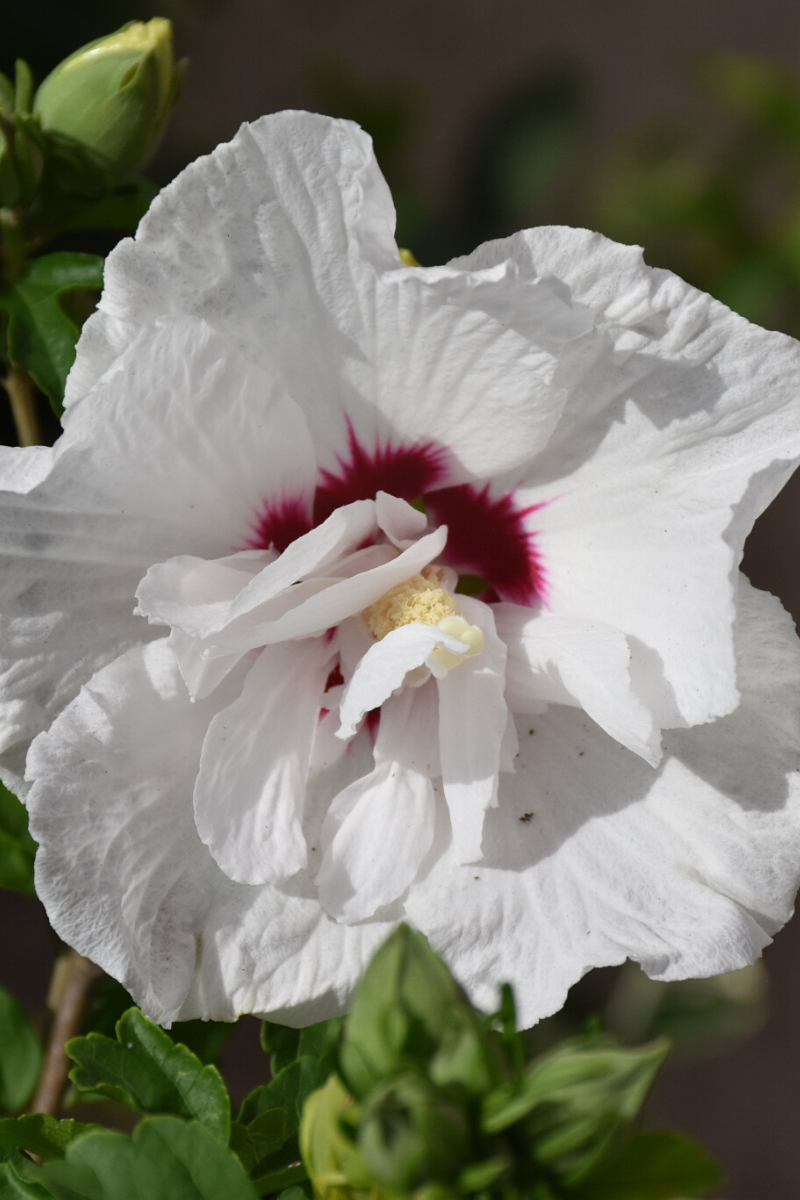
Bali Rose of Sharon is a stunning late-summer shrub that bears bold, semi-double white flowers with dramatic deep red throats from midsummer through early fall, creating an eye-catching display when much of the summer garden has peaked. Growing 5–9 feet tall with an upright habit and spreading 8–11 feet wide, it serves beautifully as a hedge, accent specimen, or mass planting in sun to partial shade. The large, showy blooms attract butterflies and hummingbirds in abundance, making it a standout for wildlife-friendly gardens. Green foliage transitions to warm red-burgundy and copper-bronze tones in fall, extending the season’s interest. Resistant to deer, rabbits, insects, and disease, it’s a reliable, low-maintenance shrub that cold-hardy gardens can count on. Train it as a small tree standard for a truly elegant landscape focal point.

Foliage on this outstanding dwarf variety emerges rich purple, progresses to deep near-black as summer heat comes on, then lightens up in shades of red and orange in fall; large, soft panicles of bloom in early summer has the appearance of smoke


Bailey Compact Highbush Cranberry features showy white lacecap flowers held atop the branches in late spring. It features an abundance of magnificent scarlet berries from late summer to late winter. It has dark green deciduous foliage which emerges brick red in spring. The serrated lobed leaves turn an outstanding orange in the fall. The smooth gray bark and gold branches add an interesting dimension to the landscape.


Butterflies are brilliant pollinators and add vibrancy and color to the garden. A summer's day wouldn't be the same without the gentle fluttering of delicate wings. They connect us with living and breathing nature and are an essential part of a dynamic ecosystem. However, in the past forty years, these insects, which were once a common sight in our gardens, are now in decline thanks to habit loss, climate change and the use of pesticides.
But do not despair – there is a lot you can do to help improve their numbers! Planting for Butterflies will show you how you can attract these beautiful insects and help them to flourish by creating a butterfly-friendly garden. No matter how small or large your space – from a window ledge in the city to a country garden – Jane Moore offers advice on the nectar-rich blooms to grow, and when and where to plant them.
This charmingly illustrated, practical guide will set your garden aflutter.