
Search results
49 results
Search results

Features pretty white flowers in spring followed by clusters of large, glossy brilliant red berries that persist into winter. Fantastic lustrous dark green leaves that turn scarlet in fall, the quality of color approaching that of Burning Bush. Great for massing or naturalizing for its colorful fruit and foliage display.

Ground Hug® Aronia brings all the outstanding native virtues of chokeberry in a uniquely low, trailing form that hugs the ground at under a foot tall while spreading 3–5 feet wide — perfect for slopes, banks, and problem areas that need coverage without bulk. Clusters of white spring flowers draw butterflies and native bees, followed by glossy black berries that attract birds and provide important wildlife forage through fall. The glossy foliage turns vivid red-burgundy in autumn for a striking seasonal display, making this workhorse native beautiful in every season. Native to the Great Lakes region, deer and rabbit resistant, and tolerant of Black Walnut root competition and erosion, it’s an outstanding choice for naturalizing difficult ground.


Low Scape Mound® Aronia features showy panicles of white flowers with brick red anthers at the ends of the branches in mid spring. It features an abundance of magnificent black berries from late summer to mid fall. It has forest green deciduous foliage. The glossy oval leaves turn an outstanding red in the fall.


Iroquois Beauty Black Chokeberry features airy panicles of white flowers with brick red anthers at the ends of the branches in mid spring. It features an abundance of magnificent deep purple berries from late summer to late winter. It has dark green deciduous foliage. The glossy oval leaves turn an outstanding burgundy in the fall.


Capture coziness year round with an indulgent blend of holly berries and cardamom paired with creamy sandalwood and orange blossom.
Directions: Open bag from the bottom to allow contents to release into the container of your choice. Arrange botanicals to be displayed on the surface as needed. *Note: Our decorative fragrance performs better than other potpourris on the market because we utilize highly fragranced wood chips and other carriers that allow our fragrances to stay fresher longer. These types of porous materials also allow the fragrance to be released into the air for maximum strength, leading you to the best experience possible.
Fragrance Notes: Holly Berries, Camphor, Cardamom, Cinnamon, Orange Blossom, Fir, Sandalwood, Cedarwood
Details: Use Time: Up to 4 weeks; 8 oz; 5.5"W x 4"D x 7"H; includes tester bag


Cornelian Cherry Dogwood has clusters of yellow flowers along the branches from late winter to early spring before the leaves. It has dark green deciduous foliage. The pointy leaves do not develop any appreciable fall color. It produces red berries from early to mid summer. The peeling brown bark adds an interesting dimension to the landscape.

Autumn Magic is a compact, less spreading version of Black Chokeberry with a brilliant mixture of red-purple autumn foliage. Attractive white flower clusters appear in May, followed by clusters of blackish purple berries that persist through the winter. Clean, shiny dark green leaves turn purple-red in fall. Plant several in mass to amplify the colorful foliage and fruit display. Excellent for wet areas.

Low Scape Snowfire® Aronia features showy panicles of white flowers with red anthers at the ends of the branches in mid spring. It features an abundance of magnificent navy blue berries from late summer to late fall, which fade to black over time. It has forest green foliage with olive green undersides. The glossy oval leaves turn an outstanding red in the fall.
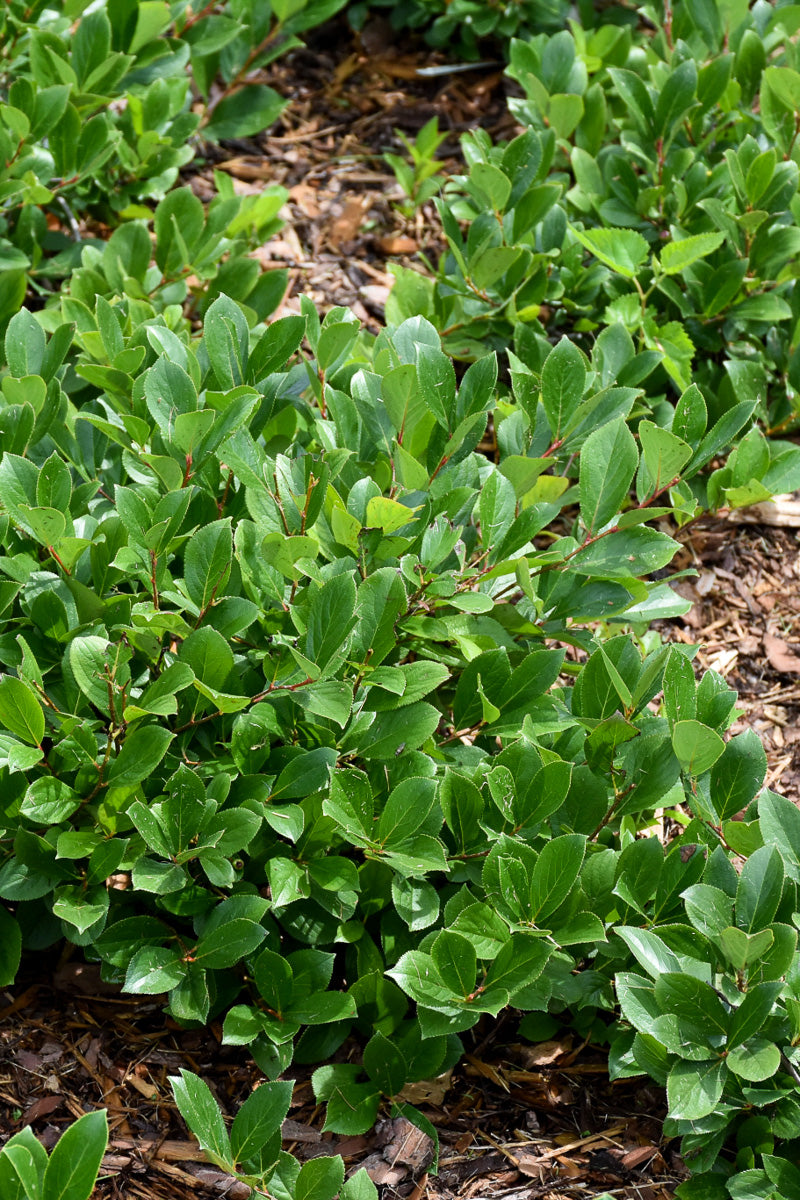

Low Scape Hedger® Aronia features showy panicles of white flowers with brick red anthers at the ends of the branches in mid spring. It has forest green deciduous foliage. The glossy oval leaves turn outstanding shades of orange and in the fall.

Black Chokeberry features showy panicles of white flowers with brick red anthers at the ends of the branches in mid spring. It has forest green deciduous foliage. The glossy oval leaves turn an outstanding red in the fall. It produces black berries from late summer to late winter.


Professor Ed Chokeberry is an open and upright spreading shrub. It has stunning white spring flowers, dark green leaves, and purple autumn berries. Watch its beautiful leaves change from dark green to red-orange and burgundy-purple in fall. Professor Ed Chokeberry is a more compact cultivar. The plant features the same attractive flowers, foliage, and fall color. The cultivar's name honors Professor Edward Hasselkus of the University of Wisconsin.


Rainier Cherry is a medium-sized tree that is commonly grown for its edible qualities. It produces yellow round fruit (technically 'drupes') with a red blush and yellow flesh which are usually ready for picking in mid summer. Note that the fruits have hard inedible pits inside which must be removed before eating or processing. The fruits have a sweet taste and a firm texture.

Butterscotch Amsonia is a native perennial with striking reddish stems and leaves that turn a rich, butterscotch color in fall. They will reward you with loads of blue-grey flowers in summer. This variety has increased disease resistance. Butterscotch Amsonia attracts early-season butterflies; deer and rabbits tend to avoid it.

A stunning variety with beautiful foliage and white-pink bell-shaped flowers in spring, clusters of blue berries in summer and a turquoise tint in fall, it has features for every season. It is very fussy about its soil conditions and must have sandy, acidic soils to ensure success

Beautiful double pink strawberry flowers adorn this upright shrub summer through fall. Matures at 8 feet tall by 4 feet wide. Easily adapts to various soil types and tolerates drought.

Northern Bayberry is a rugged native shrub prized for the clusters of waxy, aromatic gray-blue berries that cling to branches all winter and have been used for centuries to make fragrant candles. Exceptionally adaptable, it thrives in poor, sandy, and salty soils where most shrubs struggle, making it a go-to for coastal plantings, windswept slopes, and erosion control. The aromatic semi-evergreen foliage holds late into fall before giving way to persistent berry clusters that cedar waxwings, yellow-rumped warblers, and other birds rely on for cold-season fuel. Deer, rabbit, pest, and disease resistant — tolerant of salt, Black Walnut root competition, and difficult ground — it spreads into effective colonies and earns its keep in hedges, mass plantings, and naturalized areas.

Raspberry Smoothie Rose of Sharon delivers a generous flush of semi-double blooms in rich raspberry tones from midsummer through fall, just when the garden needs a burst of late-season color. Its upright habit keeps it tidy and polished — growing 3–5 feet tall and spreading 5–8 feet wide, it’s well-proportioned for hedges, borders, or layered shrub plantings in full sun. Butterflies, hummingbirds, and bees are reliably drawn to the flowers through the long bloom season. Deep green foliage holds cleanly through summer without developing appreciable fall color. Resistant to deer and rabbits, it’s a dependable choice for gardens where browsing pressure is a concern. Tolerates Black Walnut and cold conditions, making it a versatile performer for Midwestern landscapes.

Honeoye Strawberry is a perennial that is commonly grown for its edible qualities. It produces large cherry red heart-shaped berries which are usually ready for picking from late spring to early summer. This variety is considered a 'June-bearing' type of strawberry, which means that it produces one big crop of fruit at the same time. The berries have a sweet taste and a firm texture.
The berries are most often used in the following ways: