
Search results
221 results
Search results

Daisy-looking flower is stunning in gardens and (mixed) containers. Cut back late summer to encourage fresh flowers in fall.
- Blooms: Spring and Fall
- Water: Moderate
- Spacing: 8"-14"
- Height: 6"-12"
- Sun: Full sun
Plants are constantly growing, ever-changing, and therefore unique. The plant you receive may vary from the photo, but rest assured, holds the same glorious potential!

Daisy-looking flower is stunning in gardens and (mixed) containers. Cut back late summer to encourage fresh flowers in fall.
- Blooms: Spring and Fall
- Water: Moderate
- Spacing: 8"-14"
- Height: 6"-12"
- Sun: Full sun
Plants are constantly growing, ever-changing, and therefore unique. The plant you receive may vary from the photo, but rest assured, holds the same glorious potential!

- Mature Height: 10 feet
- Mature Width: 24 inches
- Sunlight: Sun to Part Shade
- Soil Conditions: Moderate to Moist
Plants are constantly growing, ever-changing, and therefore unique. The plant you receive may vary from the photo, but rest assured, it holds the same glorious potential!


Mums are a symbol of fall, with their domes of vibrant, jewel-tone colors. They will make a wonderful impact in containers, but when planted in mixed borders, they will end your garden season with a bang when paired with other late season bloomers.
Plants are constantly growing, ever-changing, and therefore unique. The plant you receive may vary from the photo, but rest assured, holds the same glorious potential!

Sun Parasol ® Crimson Mandevilla features bold crimson tubular flowers along the branches from late spring to mid fall. Its glossy pointy leaves remain dark green in color throughout the year.
- Mature Height: 10 feet
- Mature Width: 24 inches
- Sunlight: Sun to Part Shade
- Soil Conditions: Moderate to Moist
Plants are constantly growing, ever-changing, and therefore unique. The plant you receive may vary from the photo, but rest assured, it holds the same glorious potential!

Lime Marmalade Coral Bells features dainty spikes of tan bell-shaped flowers rising above the foliage from late spring to early summer. Its attractive crinkled lobed leaves emerge chartreuse in spring, turning lime green in color with showy buttery yellow variegation the rest of the year.


DreamCloud® Reblooming Hydrangea brings pure white blooms to the landscape all season long. The flowers stay attractive late into the season and are slower to fade or brown than other varieties. DreamCloud® is a strong rebloomer through fall and displays excellent disease resistance to mildew and Cercospora. With strong stems and a mature size of three to four feet, DreamCloud® is a great focal point, mid-size hedge, or in decorative containers.

White African Daisy is a fine choice for the garden, but it is also a good selection for planting in outdoor containers and hanging baskets. It is often used as a 'filler' in the 'spiller-thriller-filler' container combination, providing a mass of flowers against which the thriller plants stand out. Note that when growing plants in outdoor containers and baskets, they may require more frequent waterings than they would in the yard or garden.
- Mature Height: 14 inches
- Mature Width: 18 inches
- Sunlight: Sun
- Soil Conditions: Moist (Typical)
Plants are constantly growing, ever-changing, and therefore unique. The plant you receive may vary from the photo, but rest assured, holds the same glorious potential!


Marmalade Coral Bells features dainty spikes of white bell-shaped flowers rising above the foliage from late spring to early summer. Its attractive crinkled lobed leaves emerge pink in spring, turning coppery-bronze in color with curious hot pink undersides and tinges of harvest gold the rest of the year.

Powerball Panicle Hydrangea lives up to its bold name with massive, basketball-sized white flower panicles that make an unforgettable statement in the summer garden. Growing 5–9 feet tall and wide with a mounding habit, it serves beautifully as a border anchor, specimen planting, or mass planting in full sun to partial shade. The enormous white flowers age to warm pink tones as fall arrives, then to a rich parchment tone — excellent for dried arrangements that last well into winter. Fall foliage transitions to vivid orange, red-burgundy, and copper-bronze tones, extending the season’s interest. Resistant to deer, insects, and disease, and tolerant of Black Walnut and cold conditions, it’s a low-maintenance performer. A genuinely spectacular panicle hydrangea for gardeners who want maximum visual impact.


Chicago Lustre Viburnum is covered in stunning creamy white flat-top flowers at the ends of the branches in late spring. The royal blue fruits are held in abundance in spectacular clusters from early to late fall. It has forest green deciduous foliage. The serrated oval leaves turn an outstanding deep purple in the fall. Native to Southern Illinois.
Mature Height: 8’ to 12’
Mature Width: 6’ to 10’
Sunlight: Full sun to partial shade
Soil: Well-drained soil
Hardiness zone: 3 - 8

Whether you are a seasoned camper or a weekend glamper, the Tundra Fleece has you covered. With double layer warmth and stylized sherpa texture, this coat can take you seamlessly from city park to national park. The two-way zipper allows for easy access to your favourite harness making it the perfect layer for when temperatures drop below zero.

Daisy-looking flower is stunning in gardens and (mixed) containers. Cut back late summer to encourage fresh flowers in fall.
- Blooms: Spring and Fall
- Water: Moderate
- Spacing: 8"-14"
- Height: 6"-12"
- Sun: Full sun
Plants are constantly growing, ever-changing, and therefore unique. The plant you receive may vary from the photo, but rest assured, holds the same glorious potential!

Flower Carpet Scarlet Rose is blanketed in stunning lightly-scented scarlet flowers at the ends of the branches from late spring to early fall. The flowers are excellent for cutting. It has dark green foliage throughout the season. The glossy oval compound leaves do not develop any appreciable fall color. The fruits are showy red hips displayed in late fall. It will tolerate heat and dryness well, and looks great massed; excellent choice for ground cover, borders or containers; foliage is highly disease resistant.


Daisy-looking flower is stunning in gardens and (mixed) containers. Cut back late summer to encourage fresh flowers in fall.
- Blooms: Spring and Fall
- Water: Moderate
- Spacing: 8"-14"
- Height: 6"-12"
- Sun: Full sun
Plants are constantly growing, ever-changing, and therefore unique. The plant you receive may vary from the photo, but rest assured, holds the same glorious potential!
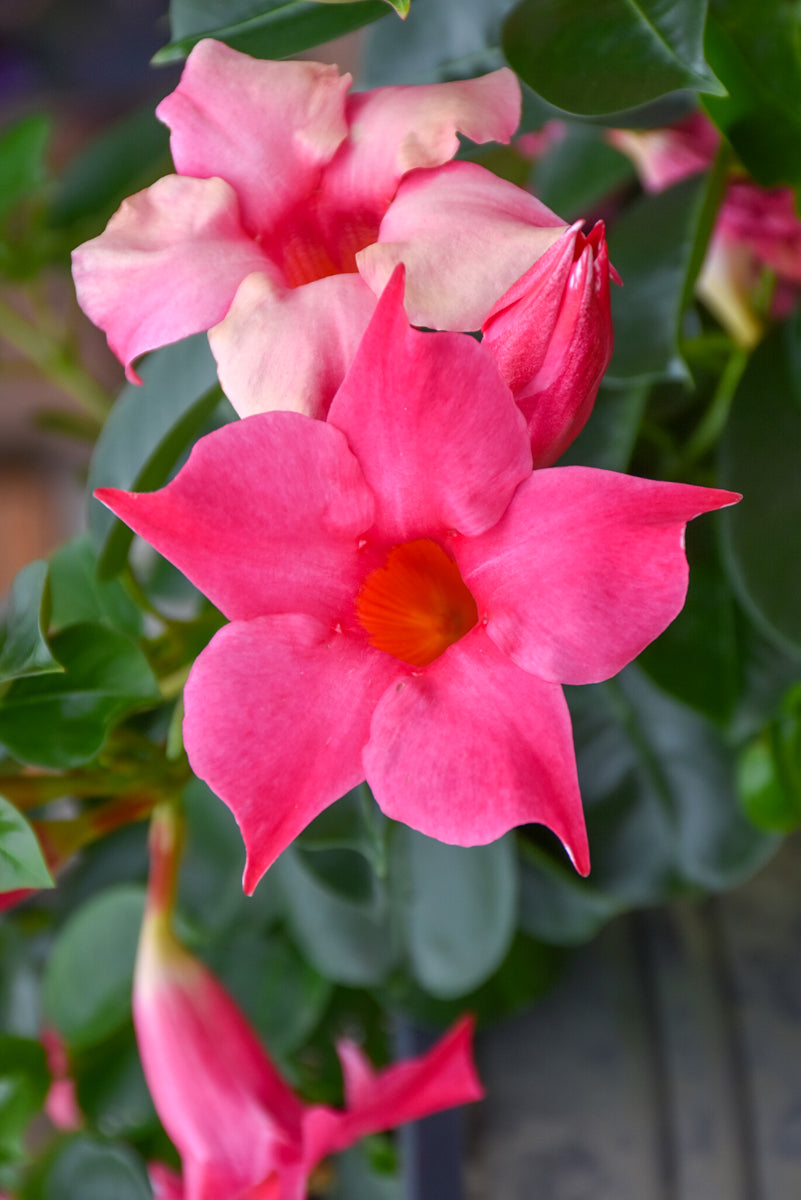
Pink Mandevilla features bold pink tubular flowers with yellow throats along the branches from late spring to mid fall. Its glossy pointy leaves remain dark green in color throughout the year.
- Mature Height: 10 feet
- Mature Width: 24 inches
- Sunlight: Sun to Part Shade
- Soil Conditions: Moderate to Moist
Plants are constantly growing, ever-changing, and therefore unique. The plant you receive may vary from the photo, but rest assured, it holds the same glorious potential!

Dark Pink Chrysanthemum is smothered in stunning double pink daisy flowers with yellow eyes at the ends of the stems from early to late fall. The flowers are excellent for cutting. Its fragrant ferny leaves remain green in color throughout the season.
Plants are constantly growing, ever-changing, and therefore unique. The plant you receive may vary from the photo, but rest assured, holds the same glorious potential!
Whether you are a seasoned camper or a weekend glamper, the Tundra Fleece has you covered. With double layer warmth and stylized sherpa texture, this coat can take you seamlessly from city park to national park. The two-way zipper allows for easy access to your favourite harness making it the perfect layer for when temperatures drop below zero.