Search results
979 results
Search results


Golden Globe Arborvitae is a dwarf conifer which is primarily valued in the landscape or garden for its ornamental globe-shaped form. It has attractive yellow evergreen foliage which emerges gold in spring. The scale-like sprays of foliage are highly ornamental and turn harvest gold in the fall, which persists throughout the winter.

Prairie Petite Lilac features showy panicles of fragrant pink flowers rising above the foliage in mid spring. The flowers are excellent for cutting. It has bluish-green deciduous foliage. The heart-shaped leaves do not develop any appreciable fall color.


Japanese Privet features showy panicles of white flowers at the ends of the branches in mid spring. It has dark green evergreen foliage. The glossy pointy leaves remain dark green throughout the winter.
Height: 12 feet
Spread: 8 feet
Sunlight:

A revolutionary new blackberry variety! The best of eastern and western blackberry genetics have been crossed to create Twilight, a new distinctive, hardy, thornless, semi-erect blackberry variety out of Oregon State. It is fairly early ripening for a semi-erect blackberry, and it produces large sized, very firm berries with durable, glossy midnight purple skin and a distinguished crisp textured "pop" when eaten! Less bleeding and handles better than other blackberry cultivars.

This stunning, compact evergreen shrub is bathed in clusters of beautiful white blooms with pink edges every spring and has loads of interest for the rest of the year; an excellent choice to mass in groupings as a focal point of the garden

One of the finest garden shrubs, featuring showy coral pink buds opening to intensely fragrant ball-shaped clusters of white flowers in early spring, plant where the fragrance can be enjoyed; an ideal specimen or border shrub; fruit is sparse


You've never seen a plant with foliage this glossy. All That Glows ® viburnum is a handsome landscaping plant that can be used as a hedge, screening, specimen plant, or foundation planting. In spring, this shrub is covered in hundreds of white flower clusters, and they are followed by shiny blue fruit in fall, provided that its pollinator, All That Glitters ® viburnum, is planted nearby. Smaller than most popular viburnums, native to North America, and deer-resistant, too!

Smooth Sumac is primarily grown for its highly ornamental fruit. The scarlet fruits are carried on showy plumes displayed in abundance from early fall to late winter. It has spikes of green flowers rising above the foliage from mid to late summer. It has green deciduous foliage. The large narrow pinnately compound leaves turn an outstanding scarlet in the fall.

Linda Campbell Rose features showy lightly-scented red flowers with yellow eyes at the ends of the branches from early summer to mid fall. The flowers are excellent for cutting. The fruits are showy orange hips carried in abundance from early to late fall. It has dark green deciduous foliage which emerges burgundy in spring. The glossy oval compound leaves turn an outstanding scarlet in the fall. The spiny purple bark adds an interesting dimension to the landscape.
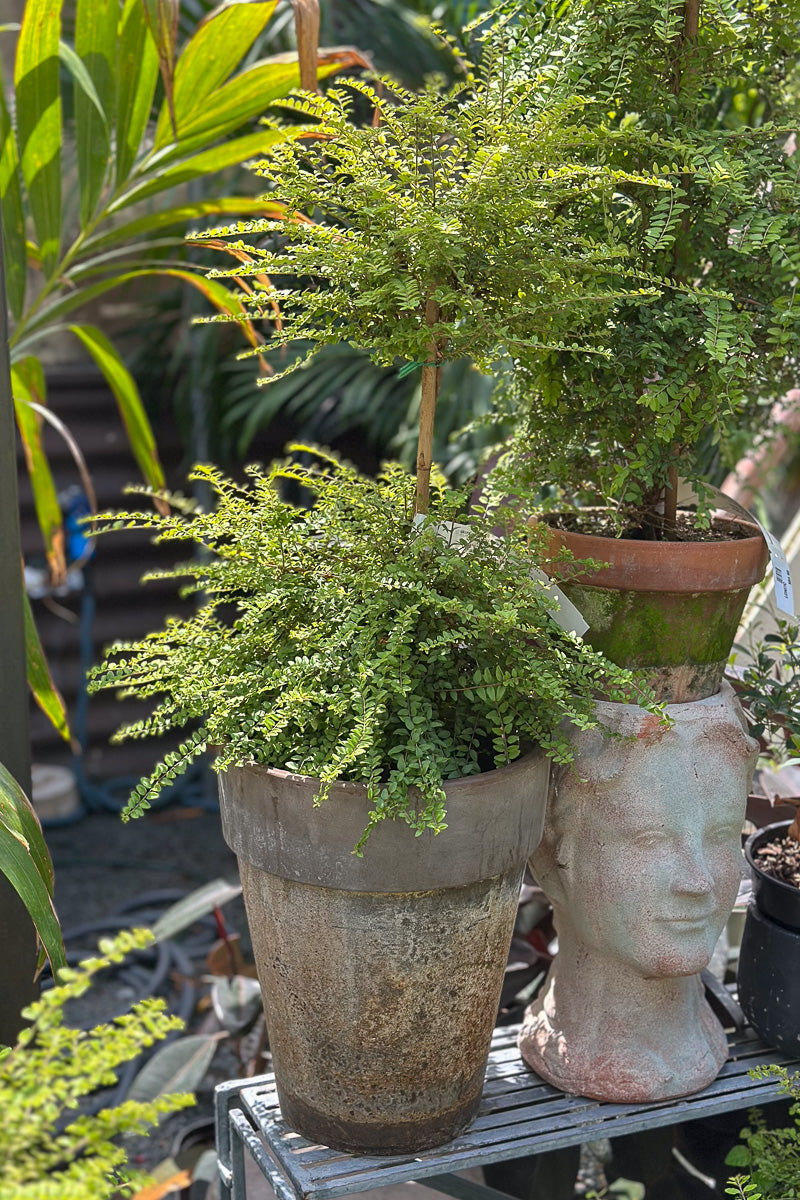
The Boxwood Honeysuckle is a tough evergreen shrub with glossy, dense leaves that stay vibrant year-round. Perfect for hedges or garden borders, it adds lasting structure and greenery. It grows well in sun or partial shade and adapts to various soils. Once established, it’s drought-tolerant and low-maintenance, making it a reliable choice for temperate gardens.


Compact Oregon Grapeholly is primarily grown for its highly ornamental fruit. It features an abundance of magnificent blue berries from mid summer to early fall. It features showy racemes of fragrant yellow flowers hanging below the branches in early spring. It has dark green evergreen foliage which emerges burgundy in spring. The spiny pinnately compound leaves turn an outstanding coppery-bronze in the fall, which persists throughout the winter.

Common Purple Lilac features showy panicles of fragrant lilac purple flowers rising above the foliage in mid spring. The flowers are excellent for cutting. It has bluish-green deciduous foliage. The heart-shaped leaves do not develop any appreciable fall color.


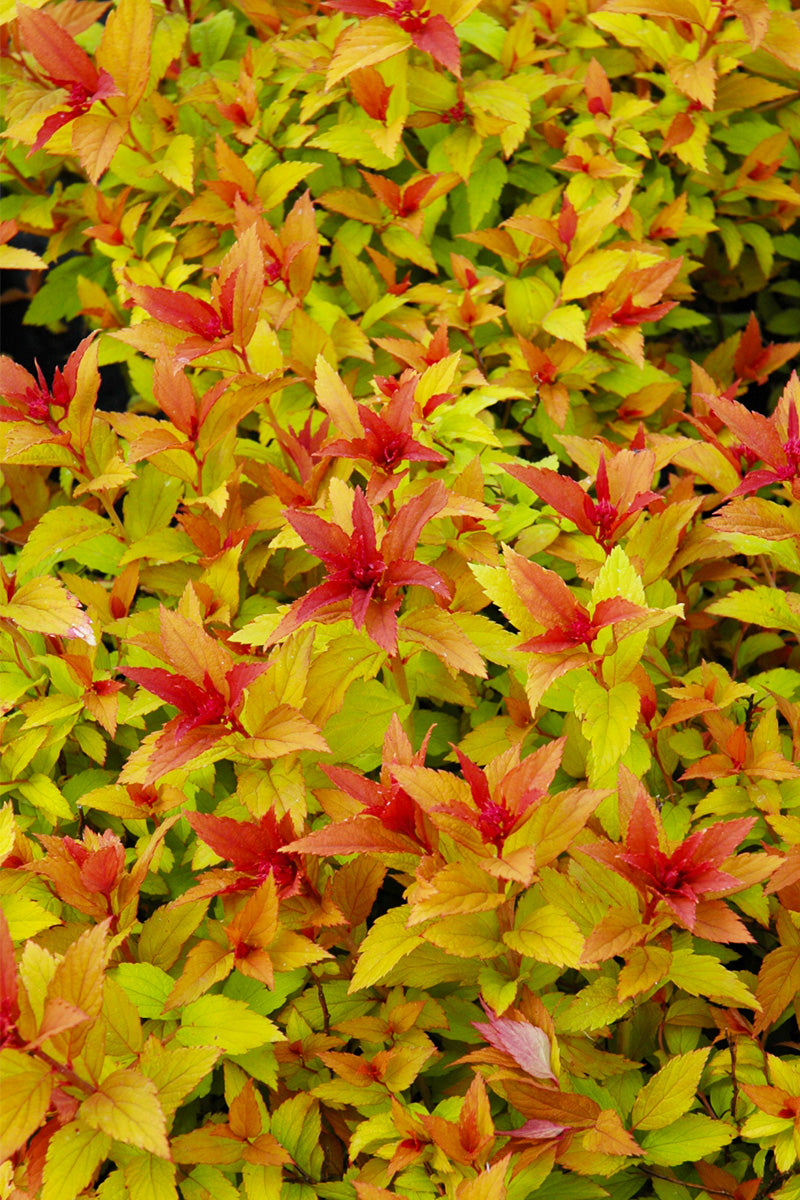
One of the most versatile of all garden shrubs for color effect, with foliage emerging bright red fading to yellow in summer, turning deep red in fall, and showy flat-topped clusters of pink flowers in early summer; forms a large dense ball, neat and tidy. Goldflame Spirea features showy clusters of hot pink flowers at the ends of the branches from late spring to early summer. It has attractive yellow foliage which emerges tomato-orange in spring. The small serrated pointy leaves are highly ornamental and turn an outstanding scarlet in the fall.


Nearly Wild Rose is bathed in stunning lightly-scented pink flowers with yellow eyes and white centers at the ends of the branches from late spring to late summer. The flowers are excellent for cutting. It has dark green deciduous foliage. The oval compound leaves turn yellow in fall.