
Search results
969 results
Search results

Foliage on this outstanding dwarf variety emerges rich purple, progresses to deep near-black as summer heat comes on, then lightens up in shades of red and orange in fall; large, soft panicles of bloom in early summer has the appearance of smoke

Hello Yellow Butterfly Weed brightens the sunny summer border with clean, vivid yellow flower clusters that are irresistible to monarchs and other butterflies—making it one of the most rewarding milkweed choices for a pollinator planting. A Great Lakes nativar, it forms a tidy, clumping mound of narrow foliage reaching twelve to eighteen inches tall, fitting neatly into borders, rock gardens, or naturalistic mass plantings. Unlike some milkweeds, it is notably drought tolerant once established, thriving in lean soils and full sun without supplemental watering. Deer and rabbits reliably pass it by, and it handles the difficult root zone beneath black walnut trees with ease. The seedpods that follow the flowers are gracefully ornamental in their own right, eventually splitting to release silky-tailed seeds. It’s a genuinely no-fuss nativar that pays for itself all summer long in monarch sightings alone.

This easy to grow, adaptable Nativar (variety of a Native Plant) is a magnet for the Monarch butterfly, bees and beneficial insects! Clouds of fragrant white flower clusters in August cover an upright mound of dark green foliage. Mingles well with moist soil-lovers such as Aster, Joe Pye Weed and Cardinal Flower. Keep in mind that Monarch caterpillars will munch on the leaves! For best results keep soil moist during dry spells.

Fiber Optics ® is a distinct improvement over the coarser Cephalanthus occidentalis that grows twice the size of this compact selection. Buttonbush is quite happy in moist conditions, tolerating flooding and wet spring soil. As such it is often used in wetland restoration work, along streams and pond banks. It’s also a great plant for low areas in the landscape that don’t dry out until late in the season. The spherical flowers are fragrant, creamy white, and many species of waterfowl eat the seed.


Compact Winged Burning Bush has rich green deciduous foliage on a plant with a round habit of growth. The pointy leaves turn an outstanding cherry red in the fall. It produces red capsules from early to late fall. The warty brown bark and harvest gold branches add an interesting dimension to the landscape.

Royal Purple Smokebush features airy panicles of yellow flowers with fuchsia stalks at the ends of the branches from early to late summer. It has attractive deep purple foliage throughout the season. The round leaves are highly ornamental and turn an outstanding brick red in the fall. This shrub will require occasional maintenance and upkeep, and is best pruned in late winter once the threat of extreme cold has passed.


Bailey Compact Highbush Cranberry features showy white lacecap flowers held atop the branches in late spring. It features an abundance of magnificent scarlet berries from late summer to late winter. It has dark green deciduous foliage which emerges brick red in spring. The serrated lobed leaves turn an outstanding orange in the fall. The smooth gray bark and gold branches add an interesting dimension to the landscape.

The Arrowhead White Butterfly Plant (Nephthytis) features arrow-shaped leaves with soft green tones and creamy white accents resembling a butterfly’s wings. Easy to care for and versatile, it thrives in bright, indirect light and adds a touch of natural beauty to any indoor space.


Butterflies are brilliant pollinators and add vibrancy and color to the garden. A summer's day wouldn't be the same without the gentle fluttering of delicate wings. They connect us with living and breathing nature and are an essential part of a dynamic ecosystem. However, in the past forty years, these insects, which were once a common sight in our gardens, are now in decline thanks to habit loss, climate change and the use of pesticides.
But do not despair – there is a lot you can do to help improve their numbers! Planting for Butterflies will show you how you can attract these beautiful insects and help them to flourish by creating a butterfly-friendly garden. No matter how small or large your space – from a window ledge in the city to a country garden – Jane Moore offers advice on the nectar-rich blooms to grow, and when and where to plant them.
This charmingly illustrated, practical guide will set your garden aflutter.


Sonic Bloom® Punch Weigela brings big energy to the garden with a spectacular spring flush of rich punch-pink trumpet flowers that completely cover the foliage, followed by a generous rebloom in late summer through fall. Growing 3–5 feet tall and wide in a compact mounding form, it’s ideal for borders and mixed plantings in full sun where its bold color can shine. Hummingbirds, butterflies, and birds are drawn to the flowers through both the spring and rebloom periods. The foliage carries a handsome bronze tint that complements the vivid blooms, then transitions to copper-bronze tones in autumn. Resistant to deer, rabbits, insects, and disease, it’s a reliable, low-maintenance performer. A high-impact, reblooming choice for gardeners who want maximum color and wildlife activity throughout the season.


This unique butterfly feeder is the perfect compliment to any nature enthusiast's yard. It offers two ways in which to attract butterflies with it's 12 oz. nectar capacity and fruit trays. There are several ways to attract butterflies. First, color is important, since they react to strong ultra-violet reflections. Next, they take the nectar from flowers, therefore, a nectar solution attracts. The Flutterby is designed to accommodate butterflies, while keeping out bees and ants. It is known that overripe fruit attracts some species of butterflies; therefore, space is provided in which to place fruit.
Description
- 12 oz. nectar capacity
- Attracts butterflies via nectar and fruit trays
- Built in ant moat deters insects and helps prevent contamination
- High-impact polycarbonate construction
- Easy to fill and clean
- Top rack dishwasher safe
- Comes with brass hanging rod
- Feeder can be hung or mounted on a 5/8" wooden dowel or pole

An abundance of beautiful semi-double flowers bloom throughout summer. Layers of fuchsia-red pointed petals encircle nectar-rich bright green cones that darken as the blooms age. Attracts pollinators to sunny perennial beds and makes an excellent cut flower. Perennial.

Syngonium is known for butterfly- or heart -shaped leaves with mottled waves of golden yellow and slight reddish-pink veining. This easy-care arrowhead plant is a favorite for busy owners because it tolerates forgotten waterings. If you want to keep your Syngonium compact and bush-like, trim it back to promote new growth. If you want to let your Syngonium's vines to grow long, then avoid pruning and simply remove spent leaves.
- Sunlight: Bright, Indirect
- Water Needs: Moderate, Low
Plants are constantly growing, ever-changing, and therefore unique. Pots shown in pictures are sold separately. The plant you receive may vary from the photo, but rest assured, holds the same glorious potential!


Fireball Seedless Burning Bush delivers the spectacular blazing red fall foliage that makes burning bush a garden classic, in a compact and responsibly seedless selection that stays where you plant it. Growing 3–5 feet tall and wide with a tidy mounding habit, it’s perfectly scaled for specimen plantings, foundation beds, or mass plantings in sun to partial shade. Rich green foliage through the growing season creates a clean, neutral backdrop, then transforms into an intense fire-engine red in fall that stops people in their tracks. Birds are drawn to the small ornamental fruit that follows the inconspicuous spring flowers. Resistant to deer, rabbits, insects, and disease, and tolerant of Black Walnut and cold, it’s a genuinely carefree shrub. A beautiful, responsible choice for dramatic fall color without the spreading concerns of seeding varieties.
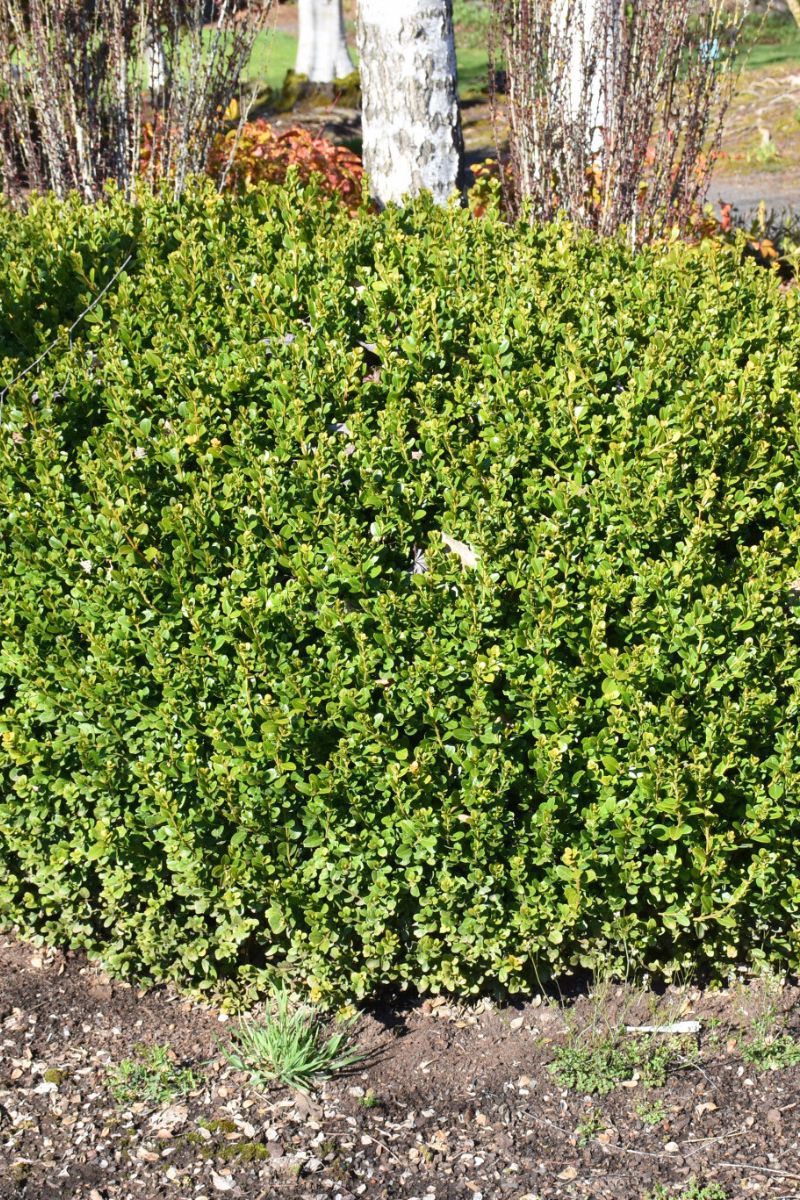
Winter Gem Boxwood is primarily valued in the landscape or garden for its ornamental globe-shaped form. It has rich green evergreen foliage. The small glossy oval leaves remain green throughout the winter.

Ground Hug® Aronia brings all the outstanding native virtues of chokeberry in a uniquely low, trailing form that hugs the ground at under a foot tall while spreading 3–5 feet wide — perfect for slopes, banks, and problem areas that need coverage without bulk. Clusters of white spring flowers draw butterflies and native bees, followed by glossy black berries that attract birds and provide important wildlife forage through fall. The glossy foliage turns vivid red-burgundy in autumn for a striking seasonal display, making this workhorse native beautiful in every season. Native to the Great Lakes region, deer and rabbit resistant, and tolerant of Black Walnut root competition and erosion, it’s an outstanding choice for naturalizing difficult ground.

Fothergilla ‘Mt. Airy’ is one of the most celebrated four-season shrubs in the landscape trade, prized for both its fragrant bottlebrush-like white flowers in spring and its spectacular autumn transformation into glowing shades of orange, red, gold, and copper — sometimes all on the same plant at once. Growing into a tidy, compact mound suited to shaded and partly shaded gardens, it thrives without aggressive suckering. Deer, rabbit, pest, and disease resistant, and tolerant of Black Walnut root competition, it performs quietly through summer and then stops traffic every fall. An outstanding choice for shade gardens, woodland borders, and mixed foundation plantings.


The perfumed flowers of Clethra are a lovely addition to the summer garden. Narrow spikes of spicy-sweet scented rose pink flowers bloom in mid to late summer, attracting flocks of butterflies and bees. The shrub grows into a compact oval shape without pruning. Glossy, bright green oval leaves turn a glowing golden yellow in fall. Tolerant of shade, but best flowering occurs in sun. Plant this beauty in groups near a window or patio to fully appreciate the fragrance.