
Search results
579 results
579 results
Sort by:
Search results


Lindsey's Skyward Bald Cypress is primarily valued in the landscape for its rigidly columnar form. It has emerald green deciduous foliage. The ferny bipinnately compound leaves turn an outstanding harvest gold in the fall. The shaggy silver bark and antique red branches add an interesting dimension to the landscape.


Red Fox Katsura Tree is primarily valued in the landscape for its rigidly columnar form. It has attractive deep purple foliage with green veins which emerges burgundy in spring. The heart-shaped leaves are highly ornamental and turn an outstanding harvest gold in the fall. The shaggy brown bark adds an interesting dimension to the landscape.

Usher in the spring with this hardy flowering cherry! Semi-double, 5-petaled rosy pink flowers with reddish flower stalks emerge in April, just before the leaves. Clean green leaves turn bronzy red to orange-red in the fall. Polished reddish brown bark is lovely to behold all season long. The relatively narrow, vase-shaped form of this small tree makes it well-suited for today's smaller landscapes. Choose a location in full sun and a soil that drains well as cherries dislike heavy, wet soil.


A very popular shade tree, valued for its delicate, ferny appearance which casts a dappled shade below; foliage emerges a brilliant yellow, fading to light green; broad spreading habit of growth, seedless, very tolerant of adverse growing conditions
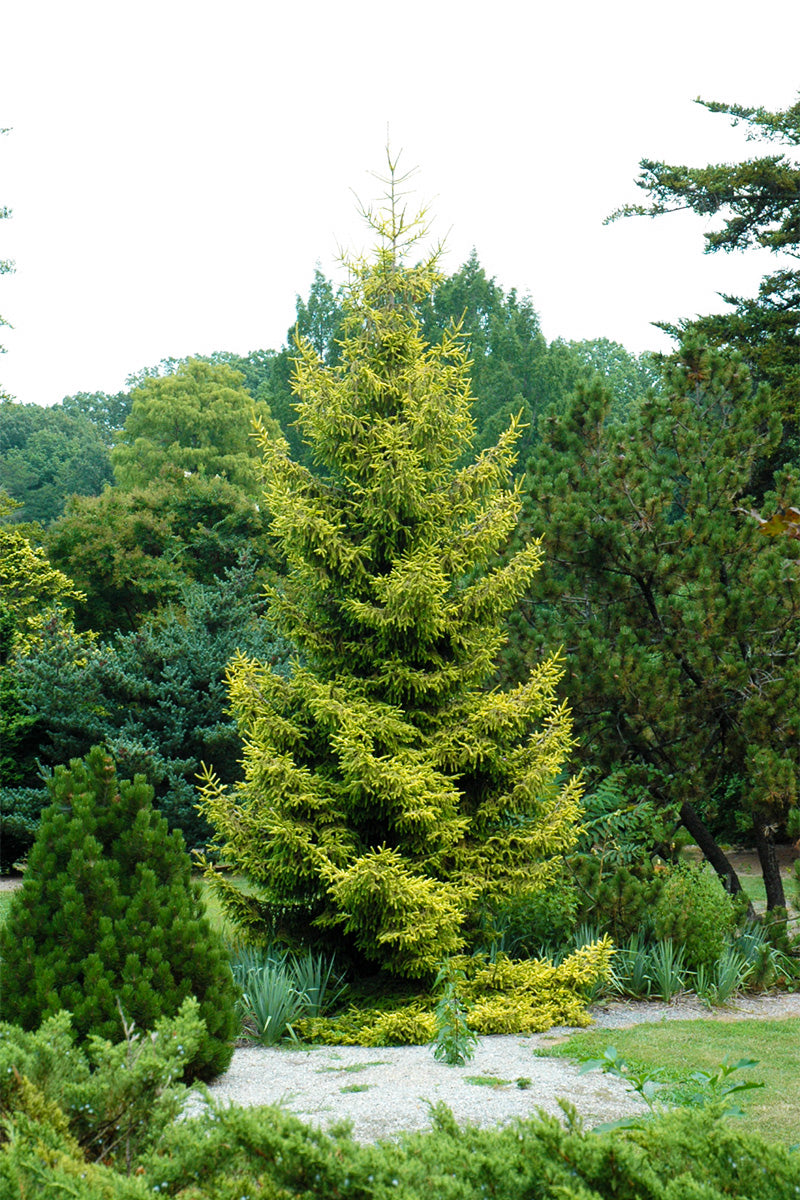


Crimson Sunset Maple is primarily valued in the landscape for its decidedly oval form. It has attractive deep purple deciduous foliage. The lobed palmate leaves are highly ornamental and turn outstanding shades of crimson and burgundy in the fall.


Burk's Redcedar is a dwarf conifer which is primarily valued in the landscape for its rigidly columnar form. It has attractive bluish-green evergreen foliage which emerges blue in spring. The scale-like sprays of foliage are highly ornamental and turn steel blue in the fall, which persists throughout the winter.

A compact variation of this popular specimen plant, with densely upright spreading branches, resembles an umbrella. It also sports an interesting orange-brown bark. The needles remain emerald green throughout the winter. It's rounded form blends into the landscape nicely. This relatively low maintenance shrub will even thrive in harsh city environments.

Swamp White Oak has dark green deciduous foliage which emerges grayish green in spring on a tree with a round habit of growth. The glossy lobed leaves turn coppery-bronze in fall.

Smoothieâ„¢ Strawberry Mango Coneflower has masses of beautiful lightly-scented yellow daisy flowers with burgundy eyes and a red ring at the ends of the stems from mid summer to mid fall, which are most effective when planted in groupings. The flowers are excellent for cutting. Its pointy leaves remain dark green in color throughout the season.

An easy to grow improvement on the Native Coneflower (Nativar) Magnus' flower has less droopy petals and a more richly colored central cone. Daisy-like rosy lavender flowers with a coppery red cone bloom from June to September, the flowers attracting butterflies and birds. Great with sun-lovers Butterfly Bush (Buddleaia), Daylily (Hemerocallis), Goldenrod (Solidago), Phlox and ornamental grasses. Leave plants standing over the winter so birds can enjoy the seeds!

This treasured, heirloom wildflower, native to the eastern U.S., is a long-lived perennial that blooms for a month or more beginning in midsummer. The pinkish-purple petals of the stunning, daisy-like flowers surround a large, dark brown cone. Petals begin to droop as the cone enlarges and fills with seeds, which attract birds in the fall and winter. Echinacea grows well in a variety of conditions, and is excellent for borders and water-wise gardens. Perfect for fresh cut flowers.
When to Sow Outside: 2 to 4 weeks before your average last frost date, or as late as 2 months before first fall frost.
When to Start Inside: 10 to 12 weeks before your average last frost date (might bloom first year if started indoors).
Days to Emerge: 10– 20 days
Seed Depth: ¼"
Seed Spacing: A group of 3 seeds every 18"
Thinning: When 1" tall, thin to 1 every 18"

Color Coded ® The Price Is White Coneflower has masses of beautiful lightly-scented white daisy flowers with coppery-bronze eyes at the ends of the stems from mid summer to mid fall, which are most effective when planted in groupings. The flowers are excellent for cutting. Its pointy leaves remain green in color throughout the season.

Kismet® Red Coneflower has masses of beautiful lightly-scented red daisy flowers with gold eyes at the ends of the stems from early summer to mid fall, which are most effective when planted in groupings. The flowers are excellent for cutting. Its pointy leaves remain green in color throughout the season.


Super winter hardy, with vigorous growth supported by stout and sturdy stems with loads and loads of flowers make this an exceptional series. Bloom power, quilled petals, ruffled edges, and dazzling color combinations are their signature. Like beloved birds, these coneflowers will add grace, form and beauty to any sunny garden space. Echinacea ‘Parrot’ has bright, golden yellow petals with a pumpkin orange halo surround a velvety brown cone for a stunning combination. Not only is the color brilliant, the number of flowers is astounding.

Color Coded ® The Fuchsia Is Bright Coneflower has masses of beautiful lightly-scented fuchsia daisy flowers with coppery-bronze eyes at the ends of the stems from mid summer to mid fall, which are most effective when planted in groupings. The flowers are excellent for cutting. Its pointy leaves remain green in color throughout the season.

Cone-fections™ Hot Papaya Coneflower has masses of beautiful lightly-scented double orange daisy flowers with red overtones and dark brown eyes at the ends of the stems from mid summer to mid fall, which are most effective when planted in groupings. The flowers are excellent for cutting. Its pointy leaves remain green in color throughout the season.